
AMD Ryzen AI Halo – Personal AI Desktop Computer
5.0Editor score
128GB LPDDR5x unified memory
AMD XDNA 2 NPU with 50 TOPS
Linux AI Developer Platform included
This guide compares the top CPUs for machine learning tasks, evaluating performance, core counts, and AI acceleration features for researchers and developers
Selecting the right processors for machine learning demands careful consideration of core counts, memory bandwidth, and specialized AI acceleration capabilities available today.
We evaluated ten top-rated systems focusing on local inference performance, model fine-tuning speeds, and developer ecosystem support for robust workflows.
Each pick highlights specific strengths for different use cases while noting that availability and pricing fluctuate frequently across major online retail platforms.
5.0Editor score

5.0Editor score

4.8Editor score
This side-by-side comparison outlines the core specifications and key capabilities of each selected processor to help you identify the best fit for your specific workload.



This NVIDIA DGX Spark 2 Pack delivers exceptional local AI performance with its GB10 Grace Blackwell chip and substantial unified memory capacity.
We may earn a commission when you buy through this link, at no additional cost to you.
The system supports models up to 200 billion parameters at FP4, enabling rapid testing and validation without cloud reliance for development teams.
While the cost is high, the ROI for increased productivity and reduced cloud dependency justifies the investment for serious researchers and developers.
It is the ideal choice for organizations needing enterprise scale AI capabilities directly on the desktop for secure and efficient workflows.
This system brings supercomputer performance to your desk allowing for local model fine-tuning and analytics without external dependencies.
With 128GB of unified memory per unit, you can handle large model weights efficiently enabling faster iteration and deployment cycles.
We may earn a commission when you buy through this link, at no additional cost to you.
The AMD Ryzen AI Halo is purpose built for local AI development featuring a dedicated NPU and 128GB unified memory to handle large workloads.
We may earn a commission when you buy through this link, at no additional cost to you.
It supports models up to 200 billion parameters locally with preloaded tools optimized for Linux based AI development and ROCm software support.
While the Linux focus might be a barrier for some, the dedicated NPU and connectivity options make it a powerful platform for rapid prototyping.
This unit is best suited for developers who need a secure connected environment to build and run intensive AI tasks locally without cloud costs.
The AMD XDNA 2 NPU delivers up to 50 TOPS allowing efficient inference and model validation without taxing the main CPU cores.
Preloaded tools models and workflows are optimized for local AI development making it easy to start building immediately upon setup.
We may earn a commission when you buy through this link, at no additional cost to you.
The AMD RYZEN 7 9800X3D offers incredible performance for general workloads with its Zen 5 architecture and massive 96MB L3 cache.
We may earn a commission when you buy through this link, at no additional cost to you.
Its high clock speeds up to 5.2GHz and power efficiency make it a strong candidate for preprocessing and lighter machine learning tasks efficiently.
Although it lacks dedicated AI accelerators, the cache and core configuration provide solid value for developers needing fast local computation on a budget.
This processor is ideal for those entering the field or needing a robust general purpose CPU that handles parallel tasks well without breaking the bank.
The 96MB L3 cache allows for faster data access and better thermal performance which helps maintain stability during intensive processing.
Built on Zen 5 technology it delivers significant IPC uplift and energy efficiency enabling higher clock speeds without excessive heat output.
We may earn a commission when you buy through this link, at no additional cost to you.
The Intel Core Ultra 9 285K features a performance hybrid architecture that integrates P-cores and E-cores to optimize workload distribution effectively.
We may earn a commission when you buy through this link, at no additional cost to you.
With 24 cores and clock speeds up to 5.7GHz it offers strong multi-threaded capabilities suitable for data preprocessing and model training tasks.
The integration of PCIe 5.0 ensures future readiness for high speed storage and accelerator cards which is critical for expanding local AI capabilities.
This chip is a good fit for users who need versatile performance across different tasks while maintaining energy efficiency and thermal management.
Prioritizing and distributing workloads between core types optimizes performance so routine tasks run cooler and faster on E cores.
Support for PCIe 5.0 allows for ultra fast data transfer rates which is essential for feeding data to accelerators efficiently.
We may earn a commission when you buy through this link, at no additional cost to you.
The AMD Ryzen 9 9950X3D is a 16 core processor designed to deliver top tier performance for content creation and intensive computing workloads.
We may earn a commission when you buy through this link, at no additional cost to you.
With a max boost clock up to 5.7GHz it handles complex operations and parallel tasks efficiently ensuring smooth execution during processing phases.
Its Zen 5 architecture provides excellent performance per watt which is beneficial for maintaining system stability during extended work sessions.
This processor is recommended for professionals needing significant computational power for local data processing and model preparation before final training.
The 16 core configuration allows for heavy multitasking and parallel processing which is critical for handling large datasets efficiently.
Architected for performance and efficiency it ensures high clock speeds and reliable execution for demanding desktop workloads and tasks.
We may earn a commission when you buy through this link, at no additional cost to you.
The AMD Ryzen 9 9900X features 12 cores and 24 threads based on the Zen 5 architecture to deliver ultra fast performance for diverse workloads.
We may earn a commission when you buy through this link, at no additional cost to you.
With a max boost of 5.6GHz and support for DDR5 memory it provides rapid processing speeds that are valuable for data preparation and analysis.
Its unlocked status allows for overclocking which can further enhance performance for specific computational tasks requiring maximum clock rates.
This option suits users who need a balance of gaming and work performance while retaining the flexibility to optimize the system for specific tasks.
Support for DDR5-5600 memory ensures fast data transfer rates which reduces bottlenecks when moving large datasets through the CPU.
The unlocked nature of this processor gives enthusiasts the ability to push clock speeds higher for maximum performance on specific tasks.
We may earn a commission when you buy through this link, at no additional cost to you.
The AMD Ryzen 7 7800X3D provides dependable and fast execution of tasks with maximum efficiency thanks to its robust cache and 5nm process.
We may earn a commission when you buy through this link, at no additional cost to you.
With 96MB of L3 cache memory it ensures excellent hit rates and reduced latency which helps improve system performance during frequent access cycles.
Its octa core design allows for reliable multitasking making it a versatile choice for users managing multiple workloads simultaneously.
This processor remains a strong option for budget conscious buyers who need solid performance for general computing and lighter ML preparation tasks.
The large L3 cache provides excellent hit rates and improved system performance enabling fast access to frequently used data.
Built on 5nm process technology this chip offers reliable performance with maximum productivity and efficient power consumption.
We may earn a commission when you buy through this link, at no additional cost to you.
The Intel Core i9-14900K features a leading max clock speed of up to 6.0 GHz which gives you smoother responsiveness and rapid processing capabilities.
We may earn a commission when you buy through this link, at no additional cost to you.
With 24 cores and 32 threads it offers substantial parallelism for multi-threaded applications that require heavy computational resources.
Its compatibility with both DDR4 and DDR5 platforms provides flexibility for existing systems and allows for efficient load time reduction.
This processor is well suited for users who prioritize raw single core speed and multitasking power across a variety of demanding applications.
The leading max clock speed of up to 6.0 GHz ensures rapid responsiveness and high frame rates for demanding workloads.
DDR4 and DDR5 platform support cuts load times and gives you the space to run the most demanding games and tasks.
We may earn a commission when you buy through this link, at no additional cost to you.
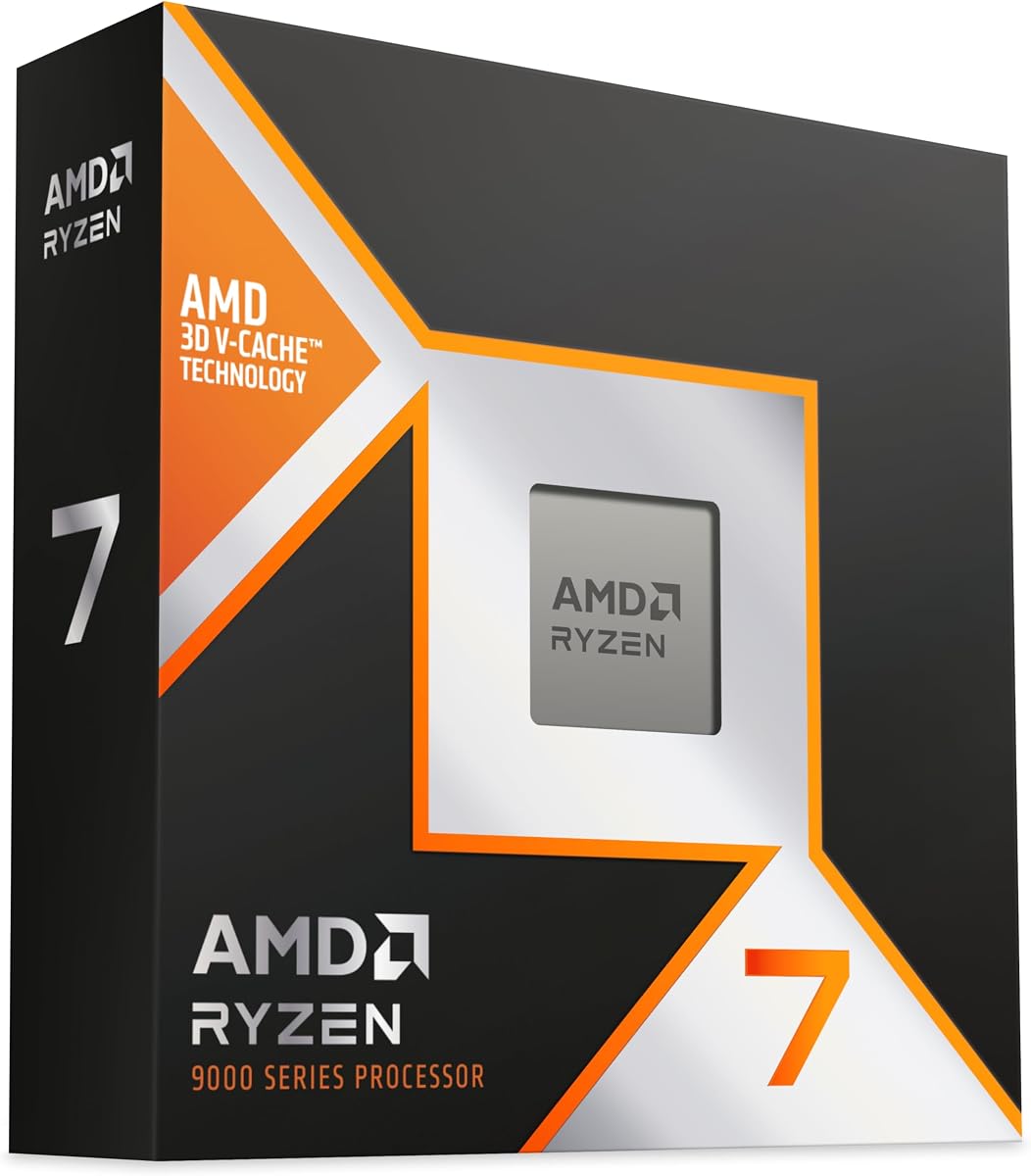
The AMD Ryzen 7 9850X3D Desktop Processor is built to deliver high performance for diverse tasks on modern AM5 platform infrastructure.
We may earn a commission when you buy through this link, at no additional cost to you.
It leverages high performance cache and Zen architecture to ensure smooth and reliable execution of complex computational workloads efficiently.
This unit fits into the ecosystem of AM5 compatible motherboards providing a solid foundation for system builders seeking speed and reliability.
Users looking for a capable general purpose processor that handles modern tasks well will find this a reliable option for daily operations.
Being ready for the AM5 platform allows for seamless integration with the latest motherboards and future upgradability for systems.
Leveraging Zen architecture core design ensures strong performance and efficiency for desktop processors across various workloads.
We may earn a commission when you buy through this link, at no additional cost to you.
The NVIDIA DGX Spark brings enterprise scale AI directly to your desk with a compact energy efficient design that accelerates time to solution.
We may earn a commission when you buy through this link, at no additional cost to you.
It delivers up to 1 petaFLOP of AI performance for local model fine-tuning and analytics providing exceptional ROI for increased productivity.
The seamless integration of the full NVIDIA AI software stack allows you to develop locally and deploy anywhere easily without complex setups.
This machine is ideal for developers who want to prototype and experiment with large models directly on the desktop in a secure setting.
This unit gives you the freedom to experiment and prototype faster by augmenting existing laptop or cloud resources effectively.
The seamless integration of the full NVIDIA AI software stack ensures you can develop locally and deploy anywhere without issues.
We may earn a commission when you buy through this link, at no additional cost to you.
Selecting a CPU for machine learning involves balancing core counts, memory bandwidth, and specialized accelerator features to match your specific workloads.
More cores and threads allow for better parallel processing which is essential for preprocessing large datasets and running multiple experiments simultaneously.
Prioritize higher core counts if you run multi-threaded training pipelines or heavy data preparation tasks regularly.
Unified memory allows the CPU and GPU to access a shared pool of memory which is vital for handling large model weights without bottlenecks.
Look for systems with at least 128GB of unified memory to support models over 200 billion parameters effectively.
Dedicated Neural Processing Units or NPUs can offload inference tasks from the main CPU to significantly speed up local testing.
Check for hardware with integrated NPUs or GPU support to ensure efficient model evaluation and deployment.
Compatibility with frameworks like PyTorch or TensorFlow and NVIDIA AI software stacks ensures you can deploy models without extensive configuration.
Choose systems that offer preloaded tools or support for your preferred development environment to reduce setup time.
High-performance systems generate significant heat so efficient cooling solutions and power management are necessary to maintain stable clock speeds.
Ensure your system has adequate cooling and power delivery to avoid throttling during intensive processing.
Verify that the CPU socket matches your motherboard and that the platform supports the latest PCIe standards for future upgrades.
Selecting an AM5 or modern platform ensures longevity and compatibility with upcoming high-speed components.
Some AI tools are optimized for Linux so verify that the operating system supports your workflow and required software libraries.
Linux based platforms often offer better integration with development tools and open-source machine learning libraries.
Evaluate the total cost of ownership against expected productivity gains and cloud savings to determine the best return on investment.
Invest in a system that balances upfront cost with long-term efficiency and performance for your specific use case.
Ensure your system is properly ventilated and connected to a stable power source to maintain optimal thermal performance during long training sessions.
Keep your BIOS and drivers updated to benefit from the latest performance optimizations and security patches from the manufacturer.
Regularly monitor system temperatures and usage with built-in tools to catch potential cooling issues before they affect stability.
Core count and memory bandwidth are often the most critical factors because they determine how quickly data can be processed and models can be trained locally.
While dedicated GPUs accelerate training, modern CPUs with high core counts and NPUs can handle inference and smaller training tasks effectively.
At least 128GB of unified memory is recommended to support large models without running into memory bottlenecks during fine-tuning.
Linux is generally preferred for its better integration with open-source libraries and tools but modern Windows systems also support major frameworks.
Upgradability depends on your motherboard socket; AM5 and modern sockets offer better long-term upgrade paths compared to proprietary platforms.
Larger cache sizes reduce latency when accessing frequently used data which helps speed up data processing and model validation workflows.
The NVIDIA DGX Spark 2 Pack leads our list for its enterprise scale capabilities while the AMD Ryzen AI Halo offers strong value for local developers.
Prioritize unified memory and AI accelerators if your workflow involves large models or frequent inference tasks to ensure efficient performance.
Always verify current availability and pricing before purchase as hardware costs and stock levels fluctuate frequently across online retailers.