
Omada AX3000 Wireless Access Point
4.5Editor score
Free cloud management
Ultra-fast Wi-Fi 6 speeds
Five year warranty
This guide compares the top 10 commercial wireless routers for businesses, covering speed, security, and scalability to help you choose the right network
Finding the right commercial wireless router is essential for modern businesses that rely on stable internet access for daily operations and customer satisfaction.
We have evaluated ten leading models based on their performance, security features, and management capabilities to help you make an informed purchasing decision.
Each product listing below highlights key specifications and benefits, keeping in mind that pricing and availability can fluctuate over time.
4.5Editor score
4.2Editor score

4.6Editor score
The following table provides a side-by-side comparison of the top ten commercial wireless routers available on the market today.




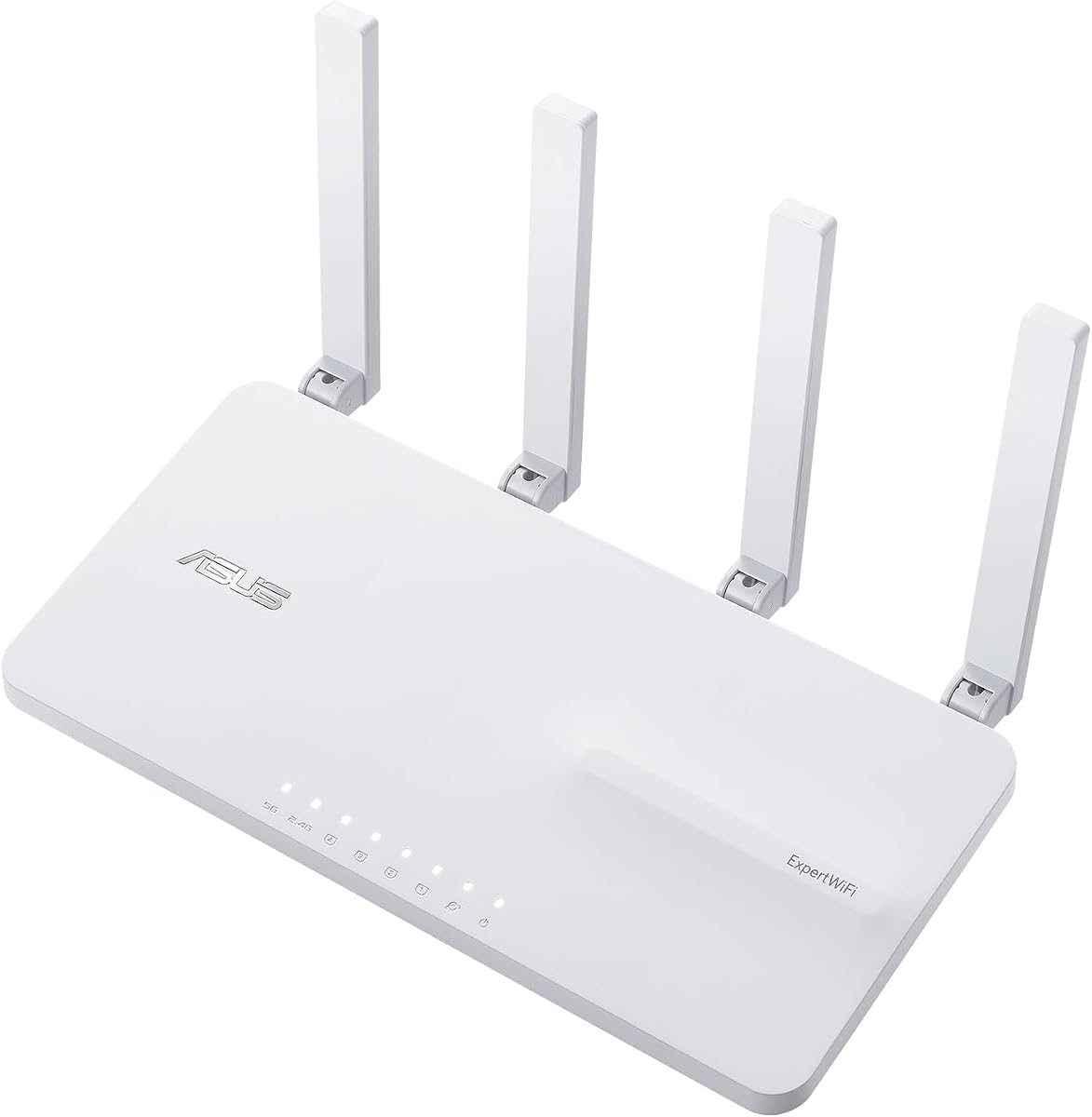
The ASUS ExpertWiFi EBR63 stands out as a top choice for small to medium businesses needing reliable WiFi 6 performance.
We may earn a commission when you buy through this link, at no additional cost to you.
It offers distinct SSIDs for different user groups and a customizable guest portal that enhances the professional image of your business.
While it may lack some deep enterprise routing features found in higher-end models, its ease of use and solid security make it a strong contender.
This router is ideal for businesses that need quick setup and remote management capabilities without compromising on core network stability.
Customize the portal to match your brand and control guest access easily.
Receive free commercial-grade security to protect sensitive business data online.
We may earn a commission when you buy through this link, at no additional cost to you.
For businesses seeking an affordable entry into commercial WiFi, the Omada EAP650 provides impressive performance and manageability.
We may earn a commission when you buy through this link, at no additional cost to you.
Its free cloud management eliminates the need for expensive hardware controllers, making it perfect for distributed networks.
The device is sleek and easy to install, fitting well into modern office environments without drawing unnecessary attention.
Buy this if you need reliable WiFi coverage at a fraction of the cost of traditional enterprise systems.
Manage your network remotely through the cloud without needing extra hardware.
A five year warranty ensures your investment is protected for years to come.
We may earn a commission when you buy through this link, at no additional cost to you.
The NETGEAR Orbi 970 pushes the boundaries of what is possible with commercial WiFi, offering cutting-edge WiFi 7 technology.
We may earn a commission when you buy through this link, at no additional cost to you.
It delivers unprecedented speed and capacity, handling hundreds of devices simultaneously without any noticeable drop in performance.
The cost is significant, but for large offices or high-density environments, the investment pays off in reliability and speed.
Choose this system if you need the absolute best performance and coverage for your business network needs.
Experience speeds up to 27 Gbps with next-generation WiFi 7 technology.
Blanket up to 10,000 square feet with fast and reliable WiFi signals.
We may earn a commission when you buy through this link, at no additional cost to you.
The Ruckus R670 is a powerhouse designed for environments that demand high density and advanced wireless capabilities.
We may earn a commission when you buy through this link, at no additional cost to you.
Its BeamFlex technology ensures optimal signal delivery to every client device, maximizing throughput and reducing interference.
Supporting Wi-Fi 7 standards future-proofs your network for upcoming devices and applications requiring higher speeds.
This access point is best suited for enterprises looking to upgrade their wireless infrastructure to the latest standards.
BeamFlex adaptive antennas deliver signal directly to clients for better coverage.
Connect Wi-Fi and non-Wi-Fi devices into one seamless network environment.
We may earn a commission when you buy through this link, at no additional cost to you.
Designed specifically for ultra-dense environments, the Ruckus R750 ensures that high device counts do not slow down your network.
We may earn a commission when you buy through this link, at no additional cost to you.
It excels in areas where many users connect simultaneously, such as conference rooms or open office layouts.
While it requires proper planning for deployment, the result is a robust and stable wireless experience for all users.
Ideal for businesses facing congestion issues with standard access points, this model solves capacity challenges effectively.
Built to handle a large number of connected devices in one area.
Maintains consistent speeds even when the network is under heavy load.
We may earn a commission when you buy through this link, at no additional cost to you.
The Ubiquiti U6+ offers a reliable balance of speed and ease of use for small to medium business networks.
We may earn a commission when you buy through this link, at no additional cost to you.
Its compatibility with the UniFi ecosystem provides powerful management tools without a steep learning curve.
Using PoE+ simplifies installation by reducing cable clutter and removing the need for nearby power outlets.
Select this access point if you want a robust network solution that integrates easily into an existing UniFi setup.
Receive power and data over one cable to simplify your wiring setup.
Built-in encryption ensures your valuable data remains safe from unauthorized access.
We may earn a commission when you buy through this link, at no additional cost to you.
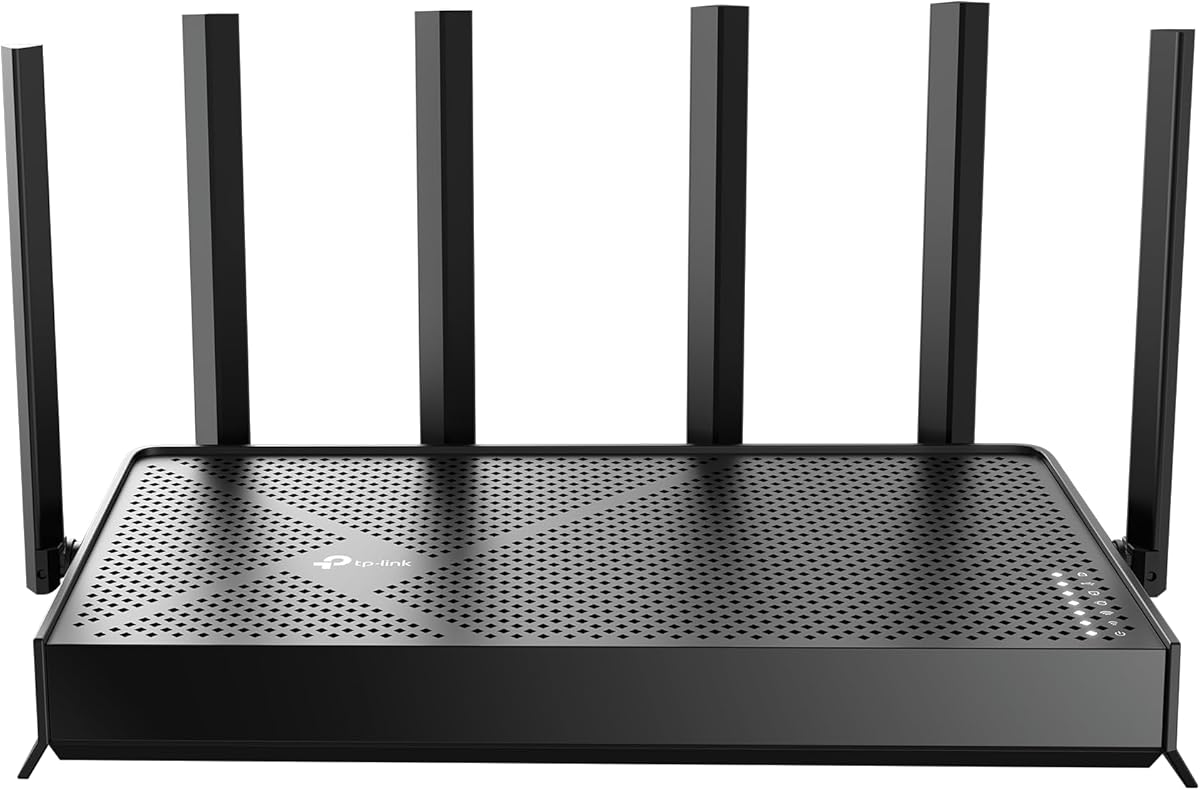
With its adoption of WiFi 7 standards, the TP-Link BE6500 offers significant advantages in speed and latency for modern networks.
We may earn a commission when you buy through this link, at no additional cost to you.
Multi-Link Operation ensures devices can use multiple bands simultaneously for a more stable connection.
Security is built into the design, aligning with industry standards to keep your network safe from threats.
This router is a smart choice for forward-thinking businesses ready to embrace the next generation of wireless technology.
Transfers data across bands simultaneously for lower latency and better speed.
Designed with advanced security as a core requirement for better protection.
We may earn a commission when you buy through this link, at no additional cost to you.
The Nighthawk WiFi 7 router brings high-speed connectivity to smaller business spaces without the complexity of a mesh system.
We may earn a commission when you buy through this link, at no additional cost to you.
Its tri-band design dedicates a band to backhaul traffic, ensuring that performance remains consistent even under load.
Setup is straightforward with the dedicated app, making it accessible even for users with limited technical knowledge.
Choose this router if you need high performance in a single unit without the cost of a full mesh system.
Dedicated bands ensure faster speeds for demanding devices and users.
Set up and manage your network easily through the free mobile app.
We may earn a commission when you buy through this link, at no additional cost to you.
The ASUS RT-BE88U is built for businesses that require massive wired and wireless bandwidth for critical operations.
We may earn a commission when you buy through this link, at no additional cost to you.
With two 10G ports, it supports multi-gigabit internet plans and fast local transfers to network drives.
Its AI WAN detection keeps your internet running by automatically switching to a backup connection if needed.
This router is a top pick for power users who need maximum throughput and advanced network management features.
Connect high-speed devices directly with cutting-edge wired network capacity.
AI WAN detection ensures you stay connected even if the main link fails.
We may earn a commission when you buy through this link, at no additional cost to you.
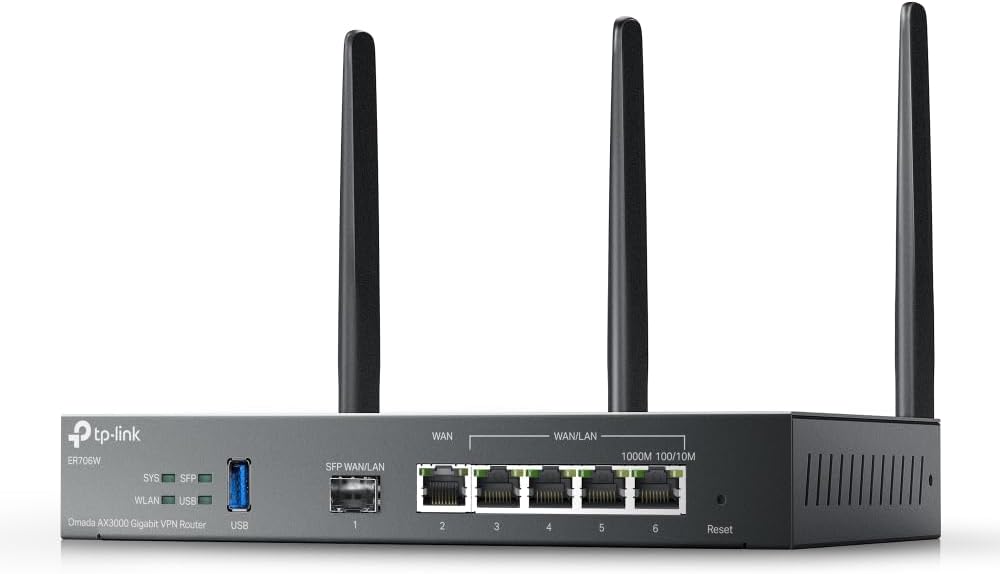
The Omada ER706W is a versatile router designed to handle complex network setups with multiple internet lines and security needs.
We may earn a commission when you buy through this link, at no additional cost to you.
It supports load balancing across up to five WAN ports, maximizing your internet utility and uptime.
Security is a strong suit, offering various VPN protocols to ensure safe remote access for your staff.
Select this model if you need a centralized router that manages both wired and wireless networks with robust security.
Use multiple broadband lines to increase your internet speed and reliability.
Access your business network securely from anywhere with supported VPN protocols.
We may earn a commission when you buy through this link, at no additional cost to you.
Choosing the right commercial wireless router requires considering several critical factors to ensure your business runs smoothly.
Look for routers that support the latest Wi-Fi standards like Wi-Fi 6 or Wi-Fi 7 to ensure high-speed connectivity for all your devices. Newer standards provide better throughput and manage multiple connections more efficiently than older models.
Prioritize the latest Wi-Fi standards for optimal performance and future-proofing.
Business data is valuable, so ensure the router offers advanced security features such as WPA3 encryption, built-in firewalls, and intrusion prevention systems. Regular firmware updates are also crucial to patch vulnerabilities and keep your network safe.
Choose routers with built-in security tools and regular update support.
Consider how your business might grow and whether the router can handle additional access points or mesh satellites. A scalable system allows you to expand your network without replacing the entire infrastructure.
Select a scalable system that supports easy network expansion.
An intuitive management interface, whether cloud-based or local, simplifies network administration and troubleshooting. Remote management capabilities are essential for businesses with multiple locations or IT staff working offsite.
Look for intuitive interfaces and remote management tools.
Check for the number and speed of Ethernet ports to ensure you can connect critical devices like servers or printers directly. High-speed ports like 2.5GbE or 10GbE are becoming increasingly important for modern business needs.
Verify you have enough high-speed wired ports for your devices.
While upfront cost is important, consider the total cost of ownership including potential subscription fees for security or cloud management. Balancing features with budget ensures you get value without overspending on unnecessary capabilities.
Balance upfront costs with long-term value and subscription fees.
Reliable customer support and a solid warranty can save you time and money if issues arise. Businesses often prioritize vendors that offer responsive technical assistance during working hours.
Prioritize vendors with strong support and warranty coverage.
Begin by placing the router in a central, elevated location to maximize signal distribution throughout your business space. Avoid placing it near metal objects or thick walls that can block wireless signals.
Regularly update the firmware through the administrative interface to ensure you have the latest security patches and performance improvements. Most modern routers support automatic updates for added convenience.
Monitor network traffic and connected devices through the management dashboard to identify any unusual activity or devices. Adjusting Quality of Service settings can help prioritize critical business applications over less important traffic.
Commercial routers typically offer more robust security features, better management tools, and higher device capacity than standard home routers. They are built to handle the demands of a professional environment with continuous use.
For very large offices or those with many obstructions, a mesh system or multiple access points are often necessary to ensure consistent coverage. A single router may struggle to cover the entire area effectively.
Use strong WPA3 encryption, change default passwords, and enable guest networks to separate visitor traffic. Regularly updating firmware and monitoring connected devices are also key steps in maintaining security.
Yes, many commercial routers support VPNs which allow employees to connect securely to the business network from remote locations. This ensures that sensitive data remains protected even outside the office.
It is generally recommended to upgrade your router every three to five years to take advantage of newer technology and security standards. Older models may become vulnerable to new threats over time.
Wi-Fi 7 is the newest standard offering the highest speeds and lowest latency, but Wi-Fi 6E is still a strong choice for most businesses. Choose based on your specific needs and budget constraints.
In summary, the ASUS ExpertWiFi EBR63, Omada EAP650, and NETGEAR Orbi 970 stand out as the top contenders in our roundup for different business needs.
Prioritize security and scalability when selecting a router to ensure your network can grow and protect your business assets effectively over time.
Remember to check current prices and availability before purchasing as these factors can change frequently in the online market.