
Upgraded Version Bed Sensor Alarm and Fall Prevention
4.5Editor score
Motion sensor placed on floor
Five volume level options
Dual power supply options
This guide compares the top bed alarm for elderly and dementia patients to help caregivers choose the best safety system for fall prevention and peace of mind
Ensuring the safety of loved ones with mobility challenges requires reliable monitoring solutions. A bed alarm for elderly and dementia patients provides critical alerts when someone attempts to leave the bed, reducing fall risks significantly.
We evaluated ten leading systems based on sensor accuracy, range, ease of use, and caregiver features. Our comparison highlights wireless pagers, pressure pads, and motion sensors designed for home or facility use.
Each selection includes detailed pros and cons alongside real-world performance notes. Prices and availability change frequently, so verify current details before purchasing to ensure the best value for your specific caregiving needs.
4.5Editor score
4.7Editor score
4.8Editor score
The following table provides a side-by-side overview of all ten selected bed alarm systems. Review the key specifications and features to determine which model aligns best with your specific monitoring requirements and budget constraints.



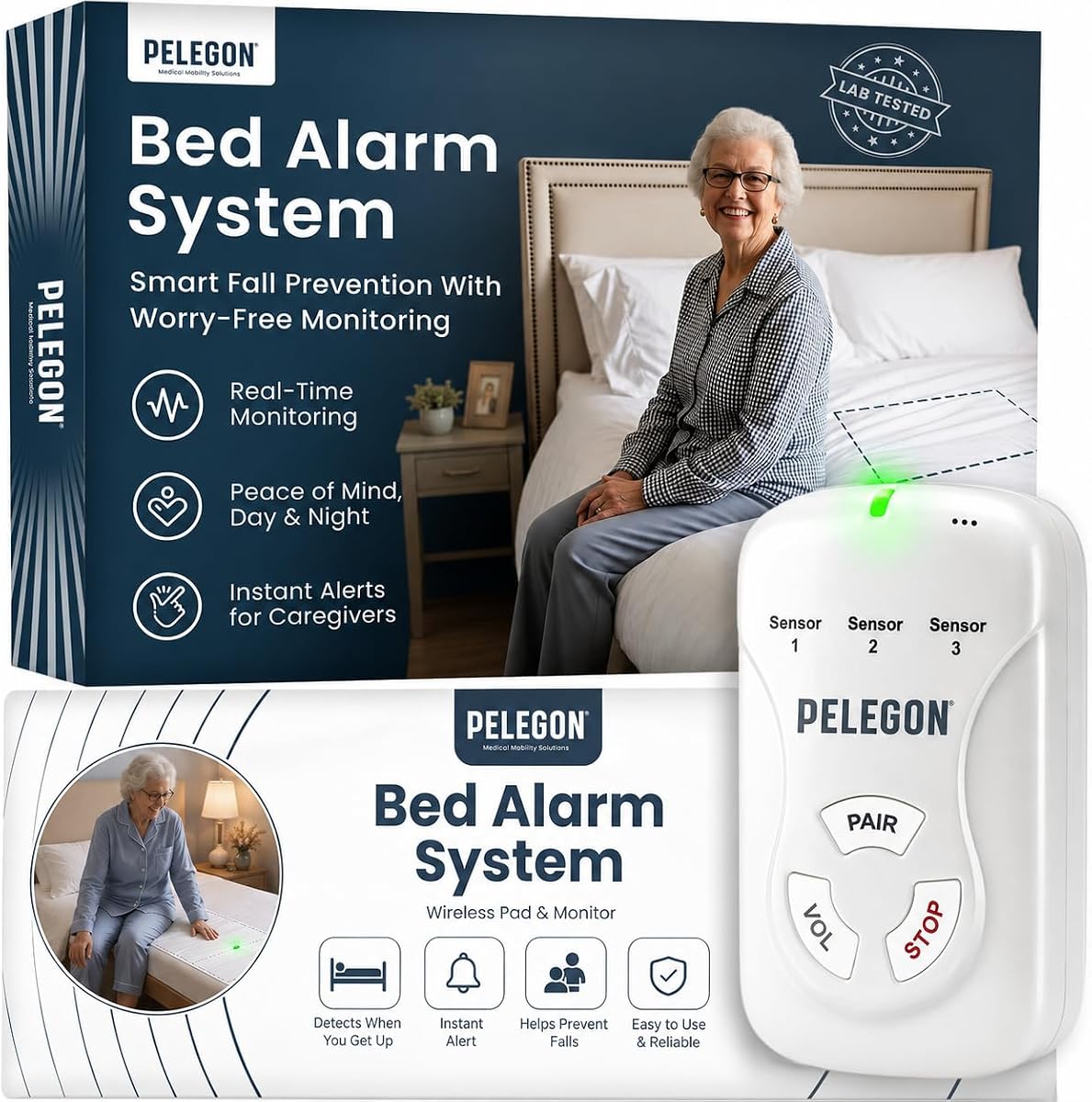
The PELEGON Bed Alarms system stands out as a top choice for caregivers seeking reliable fall prevention. It features a wireless sensor pad that detects movement as a loved one begins to rise, providing essential early warnings to reduce fall risk significantly.
We may earn a commission when you buy through this link, at no additional cost to you.
Its wireless pager works up to 328 feet away, allowing caregivers to monitor from another room confidently. The system offers customizable alert modes including sound and vibration, which helps maintain quiet environments in shared rooms during overnight care shifts.
While the setup is tool-free and quick, users should note the need for periodic battery replacements to maintain optimal performance. The pad size is standard but may require adjustment for different mattress types to ensure accurate detection without false alarms.
This system is ideal for families prioritizing rapid response times and flexibility in alert types. It balances affordability with high performance, making it a strong recommendation for home-based dementia care environments.
The system detects movement as a loved one begins to rise, giving caregivers valuable seconds to assist before a fall risk occurs.
Choose sound alerts, adjust volume, or use vibration-only mode for quiet monitoring in shared rooms or overnight care.
We may earn a commission when you buy through this link, at no additional cost to you.
The Smart Caregiver Bed Alarm offers a straightforward solution for monitoring elderly adults at home. It instantly alarms when pressure is removed from the pad, providing caregivers with peace of mind regarding their loved ones safety while resting.
We may earn a commission when you buy through this link, at no additional cost to you.
The flexible alert options allow the in-room alarm to remind the patient to stay seated, while an optional wireless kit can send silent alerts to caregivers. The vinyl pad is sealed for incontinence protection and easy to wipe clean for hygiene maintenance.
While effective for basic monitoring, users should note the wireless add-on kit is sold separately for remote notifications. The range is suitable for close proximity but may not suffice for larger homes without additional equipment.
This model is best suited for caregivers seeking a reliable, low-maintenance system for daily use. Its durability and simplicity make it a practical choice for those who prefer essential safety features without complex setups.
The 10×30 inch soft vinyl sensor pad is sealed for incontinence protection and easy to clean with a wet cloth.
The monitor features volume level options and can be silenced with the press of the reset button located on the front.
We may earn a commission when you buy through this link, at no additional cost to you.
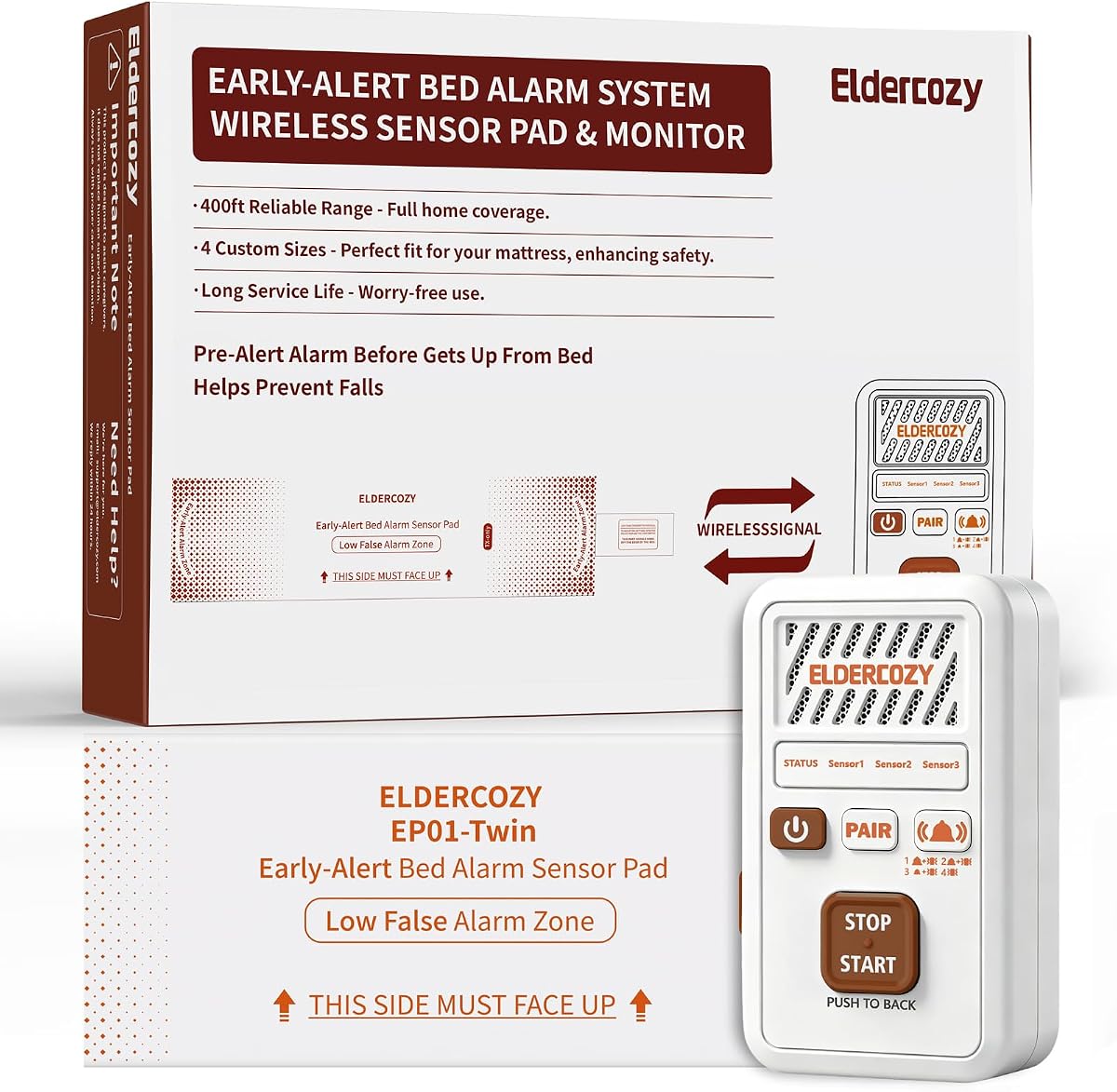
This wireless bed alarm system emphasizes comfort and reliability with its TPU composite material that never crunches. It alerts caregivers the moment a loved one sits on the edge of the bed, providing early warnings before standing occurs.
We may earn a commission when you buy through this link, at no additional cost to you.
The pager connects up to 400 feet away and includes a unique Caregiver Mode that pauses the alarm for 20 minutes during assistance. Replaceable AAA batteries extend the system lifespan indefinitely, avoiding frequent replacements of the entire unit.
While the cost is higher than basic models, the comfort and advanced features justify the investment for sensitive sleepers. The unlimited lifespan design ensures long-term savings despite the initial outlay.
Ideal for premium home care, this system combines dignity with safety. It is perfect for environments where noise disruption must be minimized while maintaining robust monitoring capabilities for dementia patients.
Crafted from soft skin-friendly TPU composite that never crunches when they roll over ensuring uninterrupted sleep for the patient.
Caregiver Mode temporarily pauses the bed exit alarm for 20 minutes so you can assist without triggering false alarms.
We may earn a commission when you buy through this link, at no additional cost to you.
This upgraded sensor system uses a motion sensor placed on the floor under the bed, triggering an alarm when a foot touches the ground. It avoids the false alarms often associated with pressure pads due to patient movement or incontinence.
We may earn a commission when you buy through this link, at no additional cost to you.
With a range up to 918 feet, it ensures caregivers receive alerts even in distant rooms. Dual power supply options using alkaline batteries or Micro USB provide flexibility for continuous monitoring without worrying about power outages.
However, accurate placement of the motion sensor is critical to avoid false triggers, and users must manage battery life carefully. The setup requires testing the sensing range before final fixation for optimal performance.
Budget-conscious families will appreciate the robust performance and long-range capabilities. It offers a cost-effective solution for preventing falls without compromising on alert reliability for elderly patients.
Transmits signal to receivers within 918 feet in open area allowing caregivers to stay far away while maintaining safety.
Includes dual power supply using alkaline battery or Micro USB to ensure continuous operation without power interruptions.
We may earn a commission when you buy through this link, at no additional cost to you.
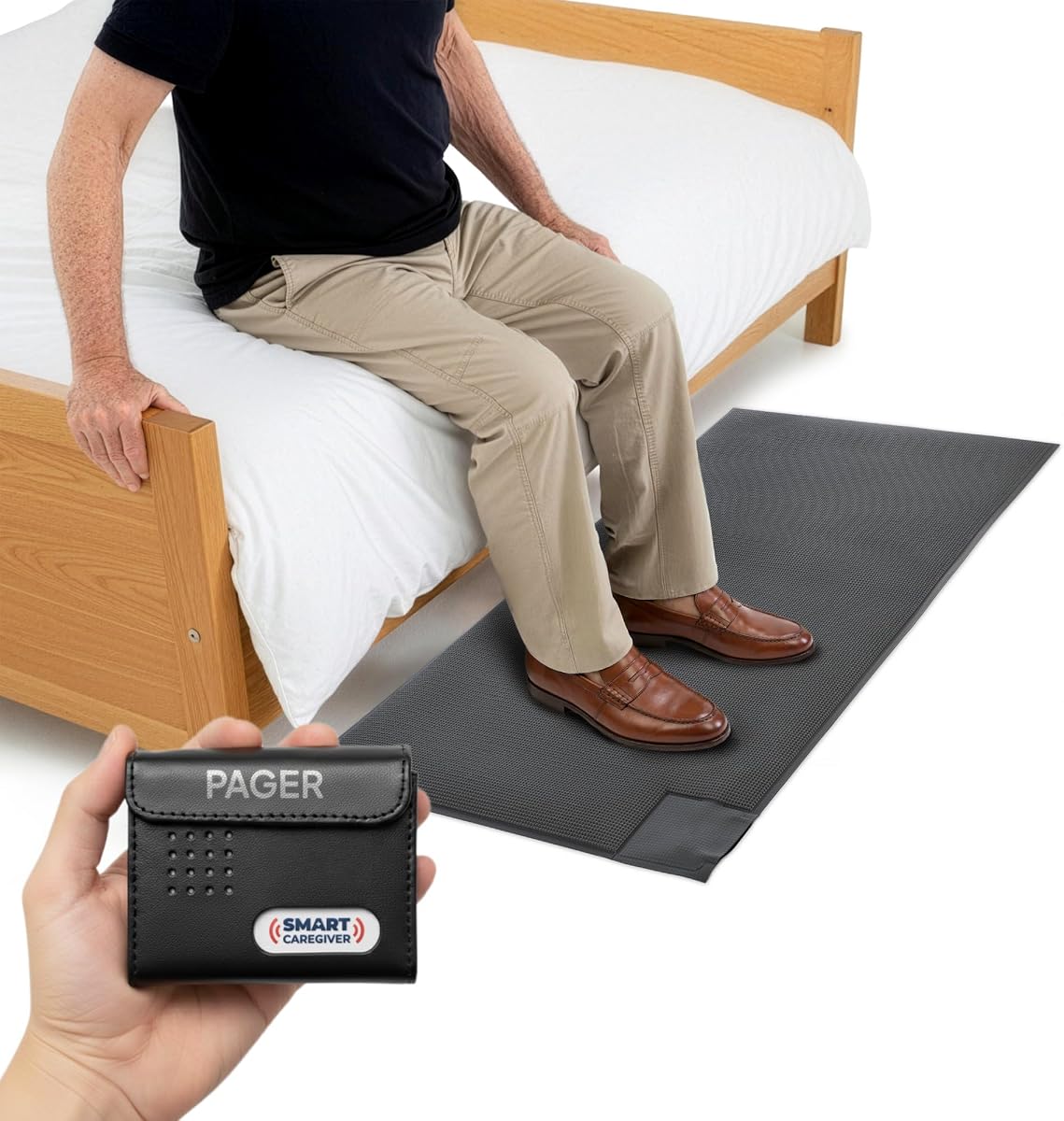
This system uses a durable 24×48 inch floor mat sensor placed next to the bed to detect when patients step onto it. It sends sound or vibration alerts to a wireless pager allowing caregivers to monitor effectively without loud noises in the room.
We may earn a commission when you buy through this link, at no additional cost to you.
The wireless pager can be carried or placed conveniently, and the system supports pairing with other Smart Caregiver sensors. This expandability makes it versatile for monitoring beds chairs and doorways simultaneously for comprehensive safety coverage.
Users should consider the floor space required for the mat placement and ensure batteries for the pager are available separately. The mat is durable enough for daily use but requires careful positioning to avoid accidental triggers.
Best for facilities or large homes, this system offers flexibility and scalability. It is an excellent choice for caregivers who need to monitor multiple areas or combine alerts for broader wandering prevention.
Includes a durable 24×48 inch floor mat sensor that alerts caregivers immediately when patients step on the weight sensing mat.
The system includes a caregiver pager and can be paired with other sensors for comprehensive monitoring of multiple areas.
We may earn a commission when you buy through this link, at no additional cost to you.
The Smart Caregiver Bed Exit Alarm features a soft 10×30 inch bed pad with full-coverage weight sensors. It alerts caregivers wirelessly when pressure is removed, ensuring timely notifications even when caregivers are away from the bedside.
We may earn a commission when you buy through this link, at no additional cost to you.
This system supports up to six different sensors, allowing monitoring of multiple beds or chairs. The extra-large contact sensor is engineered to reduce false alarms, enhancing trust and reliability for daily caregiving routines.
Setup requires proper alignment of the pad under shoulders or hips, and the wired cable must be managed discreetly. However, the durability and support from a US-based company provide long-term value for families.
Ideal for comprehensive home care setups, this alarm balances reliability and expandability. It is recommended for caregivers needing a robust network of alerts to ensure consistent monitoring throughout the day and night.
The pager supports up to six different Smart Caregiver sensors for comprehensive monitoring of multiple areas like beds chairs and doorways.
Engineered with an extra-large contact sensor to reduce false alarms compared to traditional early alert bed pads.
We may earn a commission when you buy through this link, at no additional cost to you.
This portable system uses a wireless motion sensor positioned on the floor beside the bed to detect feet touching the ground. It offers a wide variety of ringtones and volume levels to suit different environments and preferences.
We may earn a commission when you buy through this link, at no additional cost to you.
The sensor supports 360-degree rotation to prevent false alarms from minor movements, and the receiver can be charged via Type-C. This flexibility makes it ideal for temporary or mobile setups like home hospitals or rehabilitation centers.
While the range is smaller than some competitors, the portability and charging options offer convenience. Users should test detection sensitivity carefully to avoid frequent false alerts due to restless sleep.
Best for temporary or varied use cases, this alarm provides essential features at a competitive price. It suits families who need a lightweight solution that can be easily moved between rooms or care facilities.
Receiver offers 5 volume levels and 18 ringtones to adjust settings for day or night or use vibration only.
Sensor supports 360 degree rotation to prevent false alarms from incontinence or restless sleep common with bed pads.
We may earn a commission when you buy through this link, at no additional cost to you.
This professional sensor system offers a range of 918 feet in open areas allowing caregivers to monitor across large spaces. The motion sensor triggers an alarm when feet touch the floor, avoiding unnecessary alerts during rest.
We may earn a commission when you buy through this link, at no additional cost to you.
Factory pairing simplifies setup, and the system includes four alert modes combining sound, light flashing, or LED indicators. It supports dual power options for continuous operation without reliance on wall sockets.
Testing the sensing range before fixing is crucial to ensure accuracy and avoid false triggers. While battery life is standard, the durable quality tested design ensures longevity for daily caregiving use.
Suitable for large homes or facilities, this alarm delivers robust performance and ease of use. It is a reliable choice for caregivers prioritizing wide coverage and dependable alerts for patient safety.
Transmits signal to receiver within 918 feet of the open area for remote monitoring across large environments.
Motion sensor and receiver are factory paired and ready to use by simply loading batteries separately.
We may earn a commission when you buy through this link, at no additional cost to you.
This system includes both a 10×30 inch bed pad and a 10×15 inch chair pad to alert caregivers when a person attempts to leave either seating. The phone-style clip makes it easy to switch between pads using a single monitor.
We may earn a commission when you buy through this link, at no additional cost to you.
The vinyl pads are sealed for incontinence protection and designed for easy cleaning. Controls are conveniently located inside the battery compartment for volume adjustment, and a reset button silences alarms instantly.
Users must manage cords between the pad and monitor carefully to avoid tripping hazards. While features are basic, the dual-pad setup offers practical versatility for home or facility care environments.
Best for multi-surface monitoring, this system balances simplicity and utility. It is recommended for caregivers needing to track movement from both beds and chairs without purchasing separate alarm units.
Includes 10×30 inch bed pad and 10×15 inch chair pad to alert caregivers when assistance is needed for falls.
Alarm features adjustable volume and a reset button to silence the alarm easily when needed.
We may earn a commission when you buy through this link, at no additional cost to you.
This system uses a highly sensitive 32×13 inch motion sensor pad to monitor patient movements and trigger alarms when attempts to leave the bed occur. It features adjustable volume music and vibration modes for flexible notifications.
We may earn a commission when you buy through this link, at no additional cost to you.
The lightweight pager has a range up to 300 feet, allowing caregivers to move freely. The pad is made of latex-free tear and water resistant materials to maintain hygiene and withstand incontinence risks.
Users should be aware that sensitivity can vary based on mattress thickness, which may affect reliability. Simple setup involves secure clips under sheets, and the portable pager supports various home or nursing settings.
Suitable for basic monitoring needs, this system offers essential features at an accessible price. It is a decent choice for straightforward fall prevention in environments where advanced customization is not required.
Highly sensitive sensor pad accurately monitors patient movements and triggers an immediate alarm when the patient attempts to leave the bed.
Constructed from latex-free tear and water resistant materials ensuring long-lasting hygiene and easy cleaning.
We may earn a commission when you buy through this link, at no additional cost to you.
Selecting the right bed alarm requires evaluating sensor types range and usability. This guide outlines critical factors to consider for effective fall prevention and caregiver safety.
Different systems use pressure pads, floor mats, or motion sensors to detect exits. Pressure pads detect weight changes when sitting up, while motion sensors detect feet touching the floor. Choose a sensor that matches the patient's movement patterns to avoid false alarms.
Ensure the sensor is easy to position discreetly and does not disrupt sleep comfort.
The distance the pager can be from the alarm affects where caregivers can monitor from. Systems range from 300 feet to over 900 feet. Select a range that covers your home layout including other rooms where caregivers may rest or work.
Adequate range ensures timely alerts even when the caregiver is not in the same room.
Alerts can include sound, vibration, or light indicators. Adjustable volume and multiple ringtones help tailor notifications to different times of day. Vibration modes are essential for shared rooms to prevent startling the patient or disturbing others.
Look for systems with silent or vibration-only modes for nighttime monitoring flexibility.
Bed pads must withstand incontinence and frequent cleaning. Vinyl or TPU materials with sealed interiors prevent liquid damage and maintain hygiene. Durable construction ensures long-term reliability without frequent replacements.
Choose materials that are easy to wipe down and resist tearing for extended use.
Power options include replaceable batteries or USB charging. Systems with replaceable batteries offer longer operational life without needing wall outlets. USB options provide continuous power but require proximity to a socket.
Consider maintenance needs and ensure spare batteries are available to avoid monitoring gaps.
Some pagers support multiple sensors for monitoring beds chairs and doorways simultaneously. Expandable systems allow comprehensive safety networks without buying separate units. This is vital for multi-room facilities or households with multiple patients.
Verify the maximum number of sensors the system can handle before purchasing additional units.
Simple installation like tool-free setup and factory pairing saves time. Systems with clear instructions and intuitive controls reduce caregiver frustration. Complicated wiring or alignment requirements may deter consistent use.
Prioritize user-friendly designs that minimize technical barriers for daily operations.
Reliable customer support and warranty coverage protect against defects. USA-based companies often offer better assistance and spare parts availability. A warranty of at least one year ensures peace of mind for long-term investment.
Check support hours and warranty terms to ensure adequate protection for your purchase.
Begin by reading the manual to understand sensor placement and alarm settings. Position the sensor pad under the fitted sheet where weight is concentrated such as shoulders or hips, ensuring it lies flat without wrinkles.
Test the system before nightly use by gently simulating a patient rise to confirm the pager alerts. Adjust sensitivity and volume to avoid false alarms from normal movements or bedding shifts.
Maintain the alarm by regularly checking battery levels and cleaning pads with a damp cloth. Store pagers in accessible locations and replace batteries as needed to prevent monitoring gaps.
Some pressure-based systems may trigger from normal movements. However, choosing sensors with advanced motion detection or Caregiver modes can reduce false alerts significantly.
Yes, many pads are made from sealed vinyl or TPU materials that resist liquids. Always check waterproof ratings and clean regularly to maintain hygiene and sensor function.
Wireless ranges vary by model from 300 to over 900 feet. Select a system that covers your home layout to ensure timely alerts during caregiving tasks.
Many systems support up to six sensors for beds, chairs, or doors. This allows comprehensive monitoring without buying separate units for each area.
No, most alarms feature tool-free setup and simple placement instructions. Follow the manual for proper sensor positioning to ensure optimal performance.
Alarms use replaceable batteries or USB charging. Choose based on convenience and availability of power sources in your home environment.
Our top picks include PELEGON for balanced features Smart Caregiver for budget, and Twin Size Wireless for premium comfort. Each model provides essential fall prevention tailored to different caregiving needs.
Prioritize reliability and sensor sensitivity when selecting a system. Comfort and ease of use ensure consistent application without disrupting patient sleep patterns.
Prices and availability change so always check current listings for up to date details. Investing in a quality alarm provides invaluable peace of mind for caregivers and loved ones alike.