
Zopsc 2 Pack DO Dissolved Oxygen Tester
Wireless smartphone pairing
Floating waterproof design
Multilingual app support
This comprehensive guide compares the top 10 dissolved oxygen sensors 2 for aquaculture and labs, evaluating accuracy, durability, and ease of use for reliable
Selecting the right dissolved oxygen sensor is critical for maintaining healthy water ecosystems in aquaculture and laboratory settings. These devices measure the amount of oxygen available in water, which directly impacts fish health and biological processes. A high-quality sensor ensures precise readings, enabling timely interventions to prevent fish kills or experimental errors.
Our expert team evaluated ten leading models based on technical specifications, user feedback, and real-world performance data. We considered factors like calibration ease, sensor lifespan, and compatibility with various monitoring systems. This list covers a wide range of options from budget-friendly DIY kits to professional-grade industrial sensors tailored for specific applications.
Each product pick highlights unique strengths and potential limitations to help you make an informed decision. We analyzed response times, maintenance requirements, and build quality to provide a clear picture of what to expect. Please note that availability and pricing may fluctuate, so verify current details before purchasing to ensure you get the best value.
4.4Editor score

This side-by-side comparison details the key specifications and capabilities of the top ten dissolved oxygen sensors available today. Each entry highlights the core features that distinguish one model from another, helping you quickly identify which device aligns best with your specific monitoring needs and technical requirements.



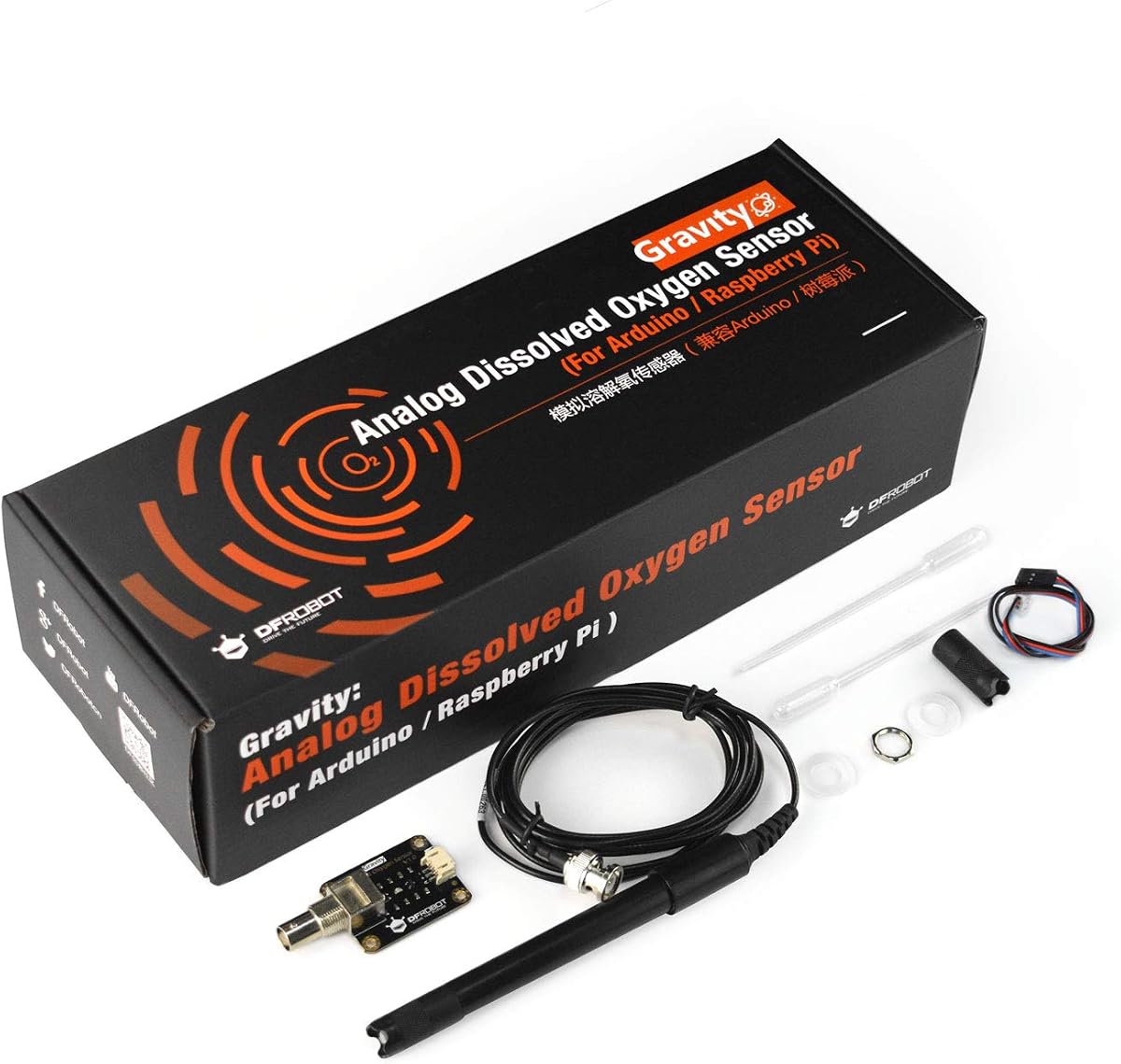
The Gravity Analog Dissolved Oxygen Sensor Kit stands out as a top choice for makers and professionals needing reliable water quality monitoring. With a 4.4 star rating, it offers a galvanic probe that requires no polarization time, making it ideal for intermittent power systems. Its fast response time and hardware filtering ensure stable, accurate readings in various environments.
We may earn a commission when you buy through this link, at no additional cost to you.
This kit excels in ease of use with integrated hardware filtering that outputs smooth analog voltage without complex software processing. It supports a wide voltage range and uses the standard Gravity 3-pin interface, ensuring seamless compatibility with Arduino, ESP32, and Raspberry Pi projects. The included spare membrane cap and replaceable consumables significantly lower long-term maintenance costs for hydroponics and lab research.
However, buyers should note that the required filling solution is not included due to shipping limitations. You will need to prepare or purchase sodium hydroxide locally before the sensor can function. Despite this minor inconvenience, the comprehensive documentation and open-source code with fast calibration algorithms make it a highly effective solution for intelligent aquaculture or laboratory deployments.
If you need a versatile sensor for DIY water quality monitoring or professional lab use, this Gravity kit is an excellent investment. It balances performance and affordability while providing the flexibility to integrate into IoT systems effortlessly. Its robust design and user-friendly features make it suitable for both beginners and experienced engineers.
The galvanic probe allows for immediate measurements without the wait for polarization, saving valuable time during critical monitoring tasks.
Compatible with popular boards like Arduino and ESP32, this kit simplifies the process of building automated water quality monitoring systems.
We may earn a commission when you buy through this link, at no additional cost to you.
The LDO Dissolved Oxygen Sensor 9020 is designed for demanding industrial and laboratory environments where reliability is paramount. It delivers accurate and consistent results, ensuring dependable water analysis for critical processes. Built with high-quality materials, this sensor promises long-term durability and resistance to harsh conditions, reducing the need for frequent replacements.
We may earn a commission when you buy through this link, at no additional cost to you.
Its user-friendly design simplifies setup and maintenance, making it accessible for technicians who need quick deployment without extensive training. The sensor improves operational efficiency by providing stable performance during use, which is crucial for continuous monitoring in industrial settings. It is a versatile solution suitable for a wide range of applications from wastewater treatment to environmental research.
While specific user ratings are not available for this model, its reputation in the industry suggests strong performance in professional contexts. The long probe cable allows for flexible installation options, enabling measurements in hard-to-reach areas. However, potential buyers should be aware of the significant cost associated with such high-grade industrial equipment.
For professionals requiring a robust sensor that can withstand rigorous use, the LDO 9020 is a solid choice. It prioritizes accuracy and durability, ensuring that your water quality monitoring remains consistent over time. Consider this option if your application demands high reliability and minimal downtime for maintenance.
Constructed with materials designed to withstand harsh environments, this sensor ensures longevity and consistent performance in challenging conditions.
The sensor's ability to provide quick and stable readings helps optimize processes and reduce the risk of errors in critical water quality monitoring.
We may earn a commission when you buy through this link, at no additional cost to you.
The YSI-605203 Pro Series Polarographic Dissolved Oxygen Sensor is a top-tier option for laboratory applications requiring precise measurements. With a 4.6 star rating, it is known for its high accuracy and reliability in controlled environments. This sensor is specifically designed as a lab supply, ensuring it meets the stringent standards required for scientific research and quality control.
We may earn a commission when you buy through this link, at no additional cost to you.
Its compact dimensions and lightweight design make it easy to handle and store, saving valuable space in busy laboratory settings. The polarographic technology provides dependable oxygen readings, supporting various experiments and tests that rely on accurate water quality data. YSI is a trusted name in the industry, offering confidence in the sensor's performance and durability.
While highly effective for lab use, this sensor is tailored for specific applications and may not be ideal for field deployments or large-scale industrial monitoring. It requires proper calibration and maintenance to ensure optimal performance over time. However, for researchers and lab technicians, its precision and ease of use are significant advantages.
If you need a reliable polarographic sensor for laboratory work, the YSI-605203 is an excellent choice. It balances accuracy with a compact design, making it a practical addition to any professional lab setup. Consider this option if your priority is high precision and trusted brand reputation.
Designed specifically for laboratory environments, this sensor provides the precision needed for accurate scientific experiments and quality control.
Its small size and light weight make it easy to transport and store, ideal for labs with limited space.
We may earn a commission when you buy through this link, at no additional cost to you.
This Dissolved Oxygen Meter with Cable is an ideal tool for aquarium enthusiasts and fish tank owners needing reliable water quality monitoring. With a 4.0 star rating, it offers a large LCD display for easy reading of dissolved oxygen levels and temperature. The 11.48 ft cable allows for convenient testing in larger tanks without needing to move fish or equipment.
We may earn a commission when you buy through this link, at no additional cost to you.
Its smart features include auto temperature compensation, 99-data memory, and a hold function, making it easy to track changes over time. The durable and portable design ensures it can withstand daily use in wet environments. The kit comes complete with batteries, membranes, electrolyte bottles, and a carrying case, providing everything needed for immediate use.
While the rating is slightly lower than some premium models, it offers a cost-effective solution with a Clark-type electrode lasting over 12 months with proper maintenance. It measures multiple parameters including salinity and barometric pressure, enhancing its utility for various applications. However, regular calibration is necessary to maintain accuracy.
For aquarium owners seeking an affordable yet capable DO meter, this kit is a strong contender. It combines essential features with a user-friendly interface, ensuring you can maintain optimal water conditions for your aquatic pets. Consider this option if you need a portable, all-in-one solution for regular tank testing.
The 11-foot cable allows you to reach deep into large tanks easily, ensuring accurate readings without disturbing the aquatic environment.
Includes all necessary accessories like batteries and membranes, so you can start testing immediately upon purchase.
We may earn a commission when you buy through this link, at no additional cost to you.
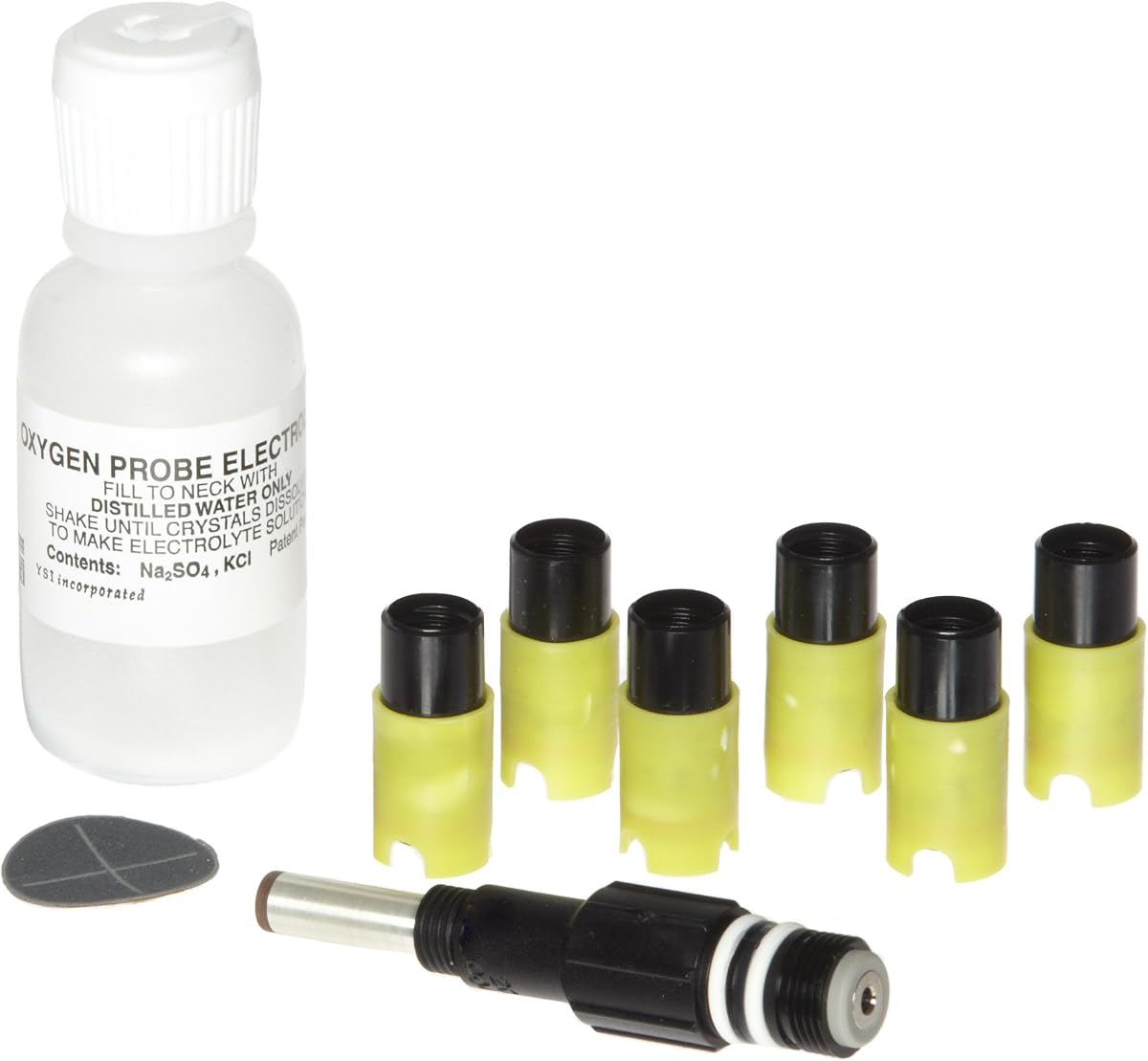
The YSI-605202 Pro Series Galvanic Dissolved Oxygen Sensor earns a top 4.8 star rating for its exceptional reliability and ease of maintenance. This galvanic sensor allows for easy user-replaceable components, ensuring your monitoring system stays operational without professional intervention. The design prioritizes convenience, allowing you to replace the sensor quickly when needed.
We may earn a commission when you buy through this link, at no additional cost to you.
Maintenance is simplified with convenient screw-on cap membranes that make changes simple and easy. The kit comes with six membrane caps and a bottle of solution, providing everything needed for immediate and future calibration. This reduces downtime and ensures you can maintain accurate readings consistently over the sensor's lifespan.
While this is a professional-grade device with a corresponding price point, the ease of replacement and included accessories offer significant value. It requires no tools for sensor replacement, making it accessible for technicians of all skill levels. However, it is designed to work within YSI systems, so compatibility is key.
For those seeking a durable galvanic sensor with minimal maintenance hassle, the YSI-605202 is an outstanding choice. Its high rating reflects user satisfaction with its performance and design. Consider this option if you need a reliable sensor that offers longevity and straightforward upkeep.
The screw-on cap membranes make changing the sensor's membrane quick and easy, reducing maintenance time and complexity.
Includes multiple membrane caps and solution, ensuring you have what you need to maintain accurate readings without additional purchases.
We may earn a commission when you buy through this link, at no additional cost to you.
The Zopsc 2 Pack DO Dissolved Oxygen Tester offers a modern approach to water quality monitoring with seamless smartphone integration. Although no user ratings are available, its features highlight its focus on convenience and accessibility. It pairs wirelessly with mobile devices within a 10 meter range, enabling real-time data transmission without cumbersome wires.
We may earn a commission when you buy through this link, at no additional cost to you.
The weather shielded floating design ensures the device can float on the surface when fitted with the weighted cover, protecting internal circuits from accidental submersion. This rugged construction makes it suitable for outdoor use in wet environments. The dedicated app supports eight languages, making it accessible for international users in various regions.
With a built-in 500mAh lithium-ion battery, the tester provides up to five days of continuous operation on a full charge. Smart power management conserves energy by dimming the display after inactivity. Data records can be exported via email at regular intervals, simplifying reporting for hydroponics and laboratory analysis.
For users who value connectivity and ease of data management, this tester is an excellent budget-friendly option. Its wireless capabilities and floating design make it versatile for field research and aquarium monitoring. Consider this option if you prefer using your smartphone to track water quality trends over time.
Pairs wirelessly with your phone for real-time monitoring, eliminating the need for separate meters and simplifying data tracking.
The five-day battery life ensures extended monitoring sessions, while the export feature makes reporting and data analysis straightforward.
We may earn a commission when you buy through this link, at no additional cost to you.
The YSI DO200 Kit EcoSense is a reliable choice for field work where portability and accuracy are crucial. With a 4.5 star rating, it delivers dissolved oxygen accuracy of 2 percent full scale, ensuring dependable measurements in various environments. Its portable design allows technicians to carry it easily for on-site testing without compromising performance.
We may earn a commission when you buy through this link, at no additional cost to you.
Automatic temperature compensation simplifies operations by adjusting readings based on water temperature automatically. Manual input for salinity and barometric pressure further enhances accuracy for diverse applications. The screw-on cap membranes are easy to replace, extending the sensor's life and reducing long-term costs for field use.
While this kit provides a solid meter, the probe is often sold separately or requires specific pairing. It is designed for professional use, so beginners might find the setup slightly technical. However, the high accuracy and YSI's reputation for quality make it a trusted tool for environmental monitoring.
If you need a portable DO meter for field inspections or environmental surveys, the YSI DO200 kit is a strong candidate. It balances accuracy with ease of use, ensuring reliable data in dynamic conditions. Consider this option if you value brand trust and field durability.
Lightweight and compact, this meter is easy to transport to remote locations for accurate field measurements.
Automatic temperature compensation and manual salinity input ensure accurate readings across varying environmental conditions.
We may earn a commission when you buy through this link, at no additional cost to you.
The YSI 6900 ProDSS ODO Optical Dissolved Oxygen Sensor represents the pinnacle of professional monitoring technology. While user ratings are not available, its reputation in the industry is strong. It utilizes optical sensor technology, which typically offers better longevity and less maintenance compared to traditional galvanic or polarographic sensors.
We may earn a commission when you buy through this link, at no additional cost to you.
Designed for integration with the ProDSS system, this sensor ensures seamless data acquisition and advanced analysis capabilities. Its durable construction makes it suitable for industrial applications where harsh conditions and continuous operation are common. The optical design minimizes drift and improves reliability over time.
The primary drawback is the high price point and the requirement for a compatible ProDSS system. This investment is best suited for large organizations or research institutions needing top-tier accuracy. However, for those with the infrastructure, it provides unmatched performance and reliability for critical water quality monitoring.
For professional facilities prioritizing advanced technology and reliability, the YSI 6900 ProDSS ODO is an excellent choice. It leverages optical advancements to ensure precise, low-maintenance monitoring. Consider this option if you need a premium sensor for demanding industrial or research environments.
Optical sensors provide consistent performance with minimal maintenance, ideal for long-term industrial monitoring.
Designed for the ProDSS system, this sensor ensures accurate data collection and compatibility with advanced monitoring networks.
We may earn a commission when you buy through this link, at no additional cost to you.
The DAN&DRE Portable Dissolved Oxygen Meter simplifies testing with convenient 0% and 100% automatic calibration buttons. While no user ratings are available, its features suggest a focus on ease of use. The intelligent temperature compensation ensures accurate readings across varying water temperatures, eliminating guesswork during field measurements.
We may earn a commission when you buy through this link, at no additional cost to you.
Its modular design allows for easy removal and replacement of the thin film dissolved oxygen electrode. This extends the life of the device and reduces long-term costs since you only need to replace the electrode rather than the entire unit. The resolution of 0.1% and 0.01mg/L provides precise data for aquaculture and aquarium environments.
With a fast response time of less than 15 seconds, you can obtain real-time data quickly. The compact and durable ABS construction makes it easy to carry for various uses from home aquariums to professional fish farms. However, specific performance reviews are not available to confirm long-term reliability.
If you need a portable DO analyzer with user-friendly calibration and modular flexibility, the DAN&DRE meter is a practical option. It balances performance with affordability, making it accessible for hobbyists and small businesses. Consider this option if you prioritize quick setup and ease of maintenance.
One-touch calibration buttons simplify the setup process, ensuring you get accurate readings every time.
The modular design allows you to replace just the electrode, reducing the overall cost of ownership and extending device life.
We may earn a commission when you buy through this link, at no additional cost to you.
The Yewick Dissolved Oxygen Meter with ATC offers a broad measurement range of 0-40mg/L, making it suitable for various water quality scenarios. Although no user ratings are available, its specifications highlight a focus on accuracy and stability. The built-in temperature sensor and automatic temperature compensation ensure consistent results across different environmental conditions.
We may earn a commission when you buy through this link, at no additional cost to you.
This meter comes as a complete kit with electrode filling fluid, calibration powder, and six spare membrane caps. The polarographic probe with 1.1m cable allows for convenient testing. With up to 2000 hours of continuous use from three LR44 batteries, it provides long-term reliability for regular monitoring tasks.
Its two-point automatic calibration simplifies setup, ensuring accurate measurements without complex manual adjustments. The device is versatile for use in aquariums, breweries, and wastewater treatment plants. However, without verified user reviews, long-term performance may vary compared to more established brands.
For budget-conscious buyers seeking a comprehensive DO testing kit, this Yewick meter is a practical choice. It includes all necessary accessories to get started immediately and covers a wide range of applications. Consider this option if you need an affordable tool for routine water quality checks.
Includes electrolyte, calibration powder, and spare parts, so you have everything needed for immediate and ongoing use.
Suitable for diverse environments like brewing, aquaculture, and aquariums, offering versatile monitoring capabilities.
We may earn a commission when you buy through this link, at no additional cost to you.
Choosing the right dissolved oxygen sensor involves evaluating several technical and practical factors to ensure it meets your specific needs.
Dissolved oxygen sensors generally fall into two categories: galvanic and polarographic. Galvanic sensors are self-powered and do not require a polarization period, making them ideal for intermittent use. Polarographic sensors need a small voltage and some time to stabilize before readings are accurate. Optical sensors are also emerging as a low-maintenance alternative.
Select a technology that matches your usage pattern. If you need instant readings without waiting, galvanic or optical sensors are preferable. For continuous monitoring in controlled environments, polarographic sensors may offer better stability and accuracy.
Ensure the sensor's range covers the expected oxygen levels in your application. Most meters measure from 0 to 20mg/L, but some professional units go higher. Resolution indicates the smallest change the device can detect, typically 0.01mg/L for precise work. Higher resolution is important for sensitive biological processes.
Choose a meter with a range and resolution appropriate for your needs. Over-specifying may increase costs without adding value, while under-specifying can lead to inaccurate data in critical situations.
Calibration is crucial for maintaining accuracy. Look for meters with automatic calibration features or buttons that simplify the process. Two-point calibration is more accurate than single-point. Some sensors require frequent calibration, while others maintain accuracy longer. Check if the required calibration solutions are included.
Prioritize models with user-friendly calibration options. Automatic features save time and reduce human error, ensuring reliable readings without constant manual adjustment.
Water quality monitoring often takes place in wet or harsh environments. Look for sensors with waterproof or floating designs to prevent damage. The housing material should resist corrosion and impact. Durability affects long-term costs since replacements can be expensive. Industrial-grade units typically last longer than consumer models.
Invest in a robust sensor designed for your environment. A durable build minimizes the risk of failure and ensures consistent performance even in challenging conditions.
Modern sensors often feature connectivity options like Bluetooth or USB for data transfer. Some meters include memory for storing readings, which is useful for tracking trends. Smartphone apps allow for real-time monitoring and easy export of data to spreadsheets. This is vital for long-term monitoring projects.
If you need to track data over time or generate reports, choose a sensor with memory or wireless capabilities. Manual recording is time-consuming and prone to errors compared to digital logging.
All DO sensors require maintenance such as membrane replacement and electrolyte filling. Some models offer user-replaceable parts to reduce costs. Check how often membranes need changing and whether the filling solution is easy to source. Optical sensors usually require less maintenance as they have no membranes.
Consider the long-term maintenance effort and cost. Models with easy-to-replace parts and included accessories can significantly reduce ongoing expenses and downtime.
If you are integrating the sensor into a larger system like IoT or industrial controllers, ensure compatibility. Some sensors work with specific protocols or require proprietary interfaces. Check if the output voltage or signal type matches your existing equipment. Open-source compatibility is a plus for DIY projects.
Verify that the sensor works with your existing setup to avoid compatibility issues. Standard interfaces make integration smoother and allow for future scalability.
Trusted brands often provide better reliability and customer support. Check if manuals and technical support are available. Reputable companies tend to offer warranties and spare parts. This can be crucial if you encounter issues during critical monitoring periods. User reviews can provide insights into real-world performance.
Opt for brands with a proven track record and good support. This ensures you have assistance if technical problems arise and that replacement parts are readily available.
To start using your sensor, ensure it is calibrated according to the manufacturer's instructions. This typically involves a two-point calibration using zero-oxygen and air-saturated solutions. Proper calibration ensures accurate readings and prevents measurement errors during testing.
During use, immerse the probe fully in the water sample and wait for the reading to stabilize. Agitate the probe gently to ensure proper oxygen exchange at the membrane surface. Avoid touching the membrane with your fingers as oils can affect accuracy.
After each use, rinse the probe with clean water and store it in a humid environment or according to specific storage instructions. Regularly replace membranes and refill electrolyte solutions to maintain sensor life. Keep the device away from direct sunlight and extreme temperatures to preserve its components.
Most dissolved oxygen sensors last between 12 to 24 months with proper maintenance. Galvanic and polarographic sensors require regular membrane and electrolyte changes, which can extend their life. Optical sensors may last longer due to fewer consumables. Regular calibration also helps maintain performance over time.
It is recommended to calibrate your sensor at least once a week or before critical measurements. Some users calibrate daily if high precision is required. Automatic calibration features can simplify this process. Proper calibration ensures the readings remain accurate and reliable over time.
Inaccurate readings often result from poor calibration, worn membranes, or incorrect storage. Ensure the electrolyte is fresh and the membrane is clean. Check the battery level and replace if low. If the problem persists, the sensor may need to be serviced or replaced.
Yes, many sensors can measure dissolved oxygen in saltwater but require salinity compensation. Enter the salinity value manually or use a meter with automatic compensation. This adjusts the readings to account for the lower oxygen solubility in saltwater compared to freshwater.
Gently wipe the membrane with a soft cloth and water to remove debris. Avoid abrasive materials or harsh chemicals that can damage the membrane. For stubborn residue, soak the probe in a mild cleaning solution recommended by the manufacturer. Ensure it is completely dry before storing.
Galvanic sensors are self-powered and do not require polarization time, making them faster to use. Polarographic sensors need an external voltage and some time to stabilize. Galvanic sensors typically have longer sensor lives but may be less accurate in some applications. Choose based on your specific needs.
Yes, automatic temperature compensation is crucial because oxygen solubility varies with temperature. Without it, readings may be inaccurate if the water temperature differs from calibration conditions. Most modern meters include this feature to ensure reliable data across varying conditions.
No, storing the sensor dry can damage the membrane and reduce accuracy. Always store it in a humid environment or with the protective cap filled with solution. This keeps the membrane moist and ready for use. Follow manufacturer storage guidelines to ensure longevity.
Selecting the right dissolved oxygen sensor depends on your specific needs, whether for aquaculture, lab work, or field monitoring. The Gravity Analog Kit stands out for IoT integration, while the YSI models offer professional-grade reliability for critical applications.
Prioritize factors like calibration ease, durability, and connectivity features to ensure the sensor fits seamlessly into your workflow. A well-chosen device will save time and resources in the long run by providing consistent, accurate data without frequent maintenance interruptions.
Remember that prices and availability may change, so verify the latest details before making your purchase. We hope this guide has provided the necessary insights to help you find the ideal dissolved oxygen sensor for your monitoring needs.