
400 Watt Solar Panels 12V
4.4Editor score
Grade A plus cells used
25 percent efficiency rating
IP68 waterproof certification
Discover the top 400 Watt Solar Panels for Rvs in this guide comparing efficiency, durability, and power output for reliable off-grid energy.
Finding reliable power for your RV journey requires high-performance solar solutions. Modern 400 watt panels deliver substantial energy to run appliances efficiently without relying on noisy generators or shore power connections.
We evaluated ten leading models based on cell efficiency, build quality, and real-world performance data. Our analysis focuses on monocrystalline technology, weather resistance, and compatibility with common RV electrical systems.
Each pick highlights unique strengths like bifacial design or compact foldable formats. Prices fluctuate due to market demand and seasonal promotions, so verify current costs before making your final purchase decision today.
4.4Editor score

4.6Editor score
4.5Editor score
This side-by-side comparison evaluates all ten products across key technical specifications and performance metrics to help you select the ideal panel for your specific RV setup and energy needs.



This product stands out as our top recommendation for RV owners seeking maximum energy output. With a 23 percent conversion efficiency, it delivers around 2000Wh daily, ensuring your appliances run smoothly without relying on external power sources.
We may earn a commission when you buy through this link, at no additional cost to you.
The bifacial design captures sunlight from both sides, potentially increasing output by up to 30 percent on reflective surfaces like white roofs. Its compact size makes installation easier on limited RV rooftops while maintaining durability against harsh weather conditions.
While it lacks an included controller, the high-quality monocrystalline cells ensure stable performance even on cloudy days. The trade-off is that you must purchase wiring components separately, but this flexibility allows customization for your specific system voltage.
Ideal for full-timers and weekend campers alike, this panel offers reliable energy independence. Its robust frame and IP65 junction box provide peace of mind during outdoor adventures. We highly recommend it for those prioritizing efficiency and space-saving design.
Bifacial technology captures reflected light, boosting total generation significantly when installed over light-colored surfaces like RV roofs or gravel.
The slim footprint allows fitting multiple units on small rooftops, maximizing energy potential where space is constrained.
We may earn a commission when you buy through this link, at no additional cost to you.
This model offers exceptional value with a 25 percent efficiency rating using advanced N-Type cells. It provides reliable power for RV systems while maintaining a budget-friendly price point compared to premium competitors in the market.
We may earn a commission when you buy through this link, at no additional cost to you.
The IP68 waterproof certification ensures durability against rain and dust, while reverse current blocking diodes prevent energy loss during night hours. The 11 AWG oxygen-free copper wire reduces resistance for efficient transmission to your battery bank.
Though it requires separate mounting hardware, the pre-drilled holes simplify installation. The enhanced MC4 connectors offer superior conductivity, reducing heat generation. This makes it a practical choice for DIYers looking for high performance without overspending.
Best for cost-conscious buyers who need robust output, this panel balances efficiency and affordability. Its strong wind and snow load ratings ensure longevity. We recommend it for anyone seeking a reliable long-term energy solution for their RV.
N-Type cells outperform traditional P-Type by reducing degradation and maintaining higher output over time in hot environments.
IP68 sealing protects internal components from moisture intrusion, ensuring safe operation even in heavy rainstorms.
We may earn a commission when you buy through this link, at no additional cost to you.
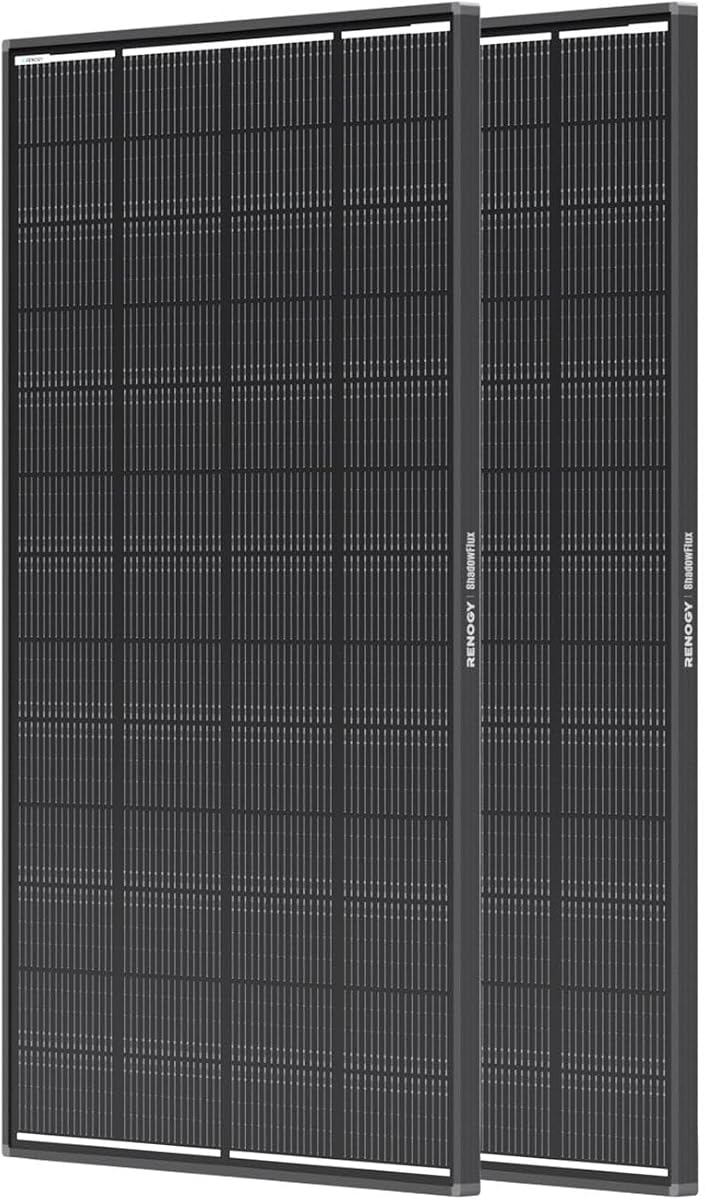
Designed for complex environments, this panel uses ShadowFlux technology to maintain output when partially shaded by trees or structures. Its N-Type cells deliver 25 percent efficiency, ensuring consistent energy generation even in less-than-ideal lighting conditions.
We may earn a commission when you buy through this link, at no additional cost to you.
The compact design saves valuable roof space, while IP67 rating protects against water vapor and hail. Advanced encapsulation enhances durability against extreme weather. This investment pays off through stable year-round performance and reduced degradation over time.
While more expensive, the premium features justify the cost for those seeking reliability. The 25-year warranty guarantees long-term value. It suits full-timers needing consistent power without interruptions. We recommend it for RVers prioritizing performance over initial savings.
Ideal for tech-savvy buyers wanting top-tier materials, this panel delivers peace of mind. Its resistance to micro-cracks ensures longevity. Choose this if you need a solar solution that performs reliably across diverse outdoor conditions and weather extremes.
ShadowFlux reduces hot spots and power loss when shade hits part of the panel, keeping the rest fully operational.
A 25-year output guarantee secures your investment, ensuring at least 80 percent power retention over decades.
We may earn a commission when you buy through this link, at no additional cost to you.
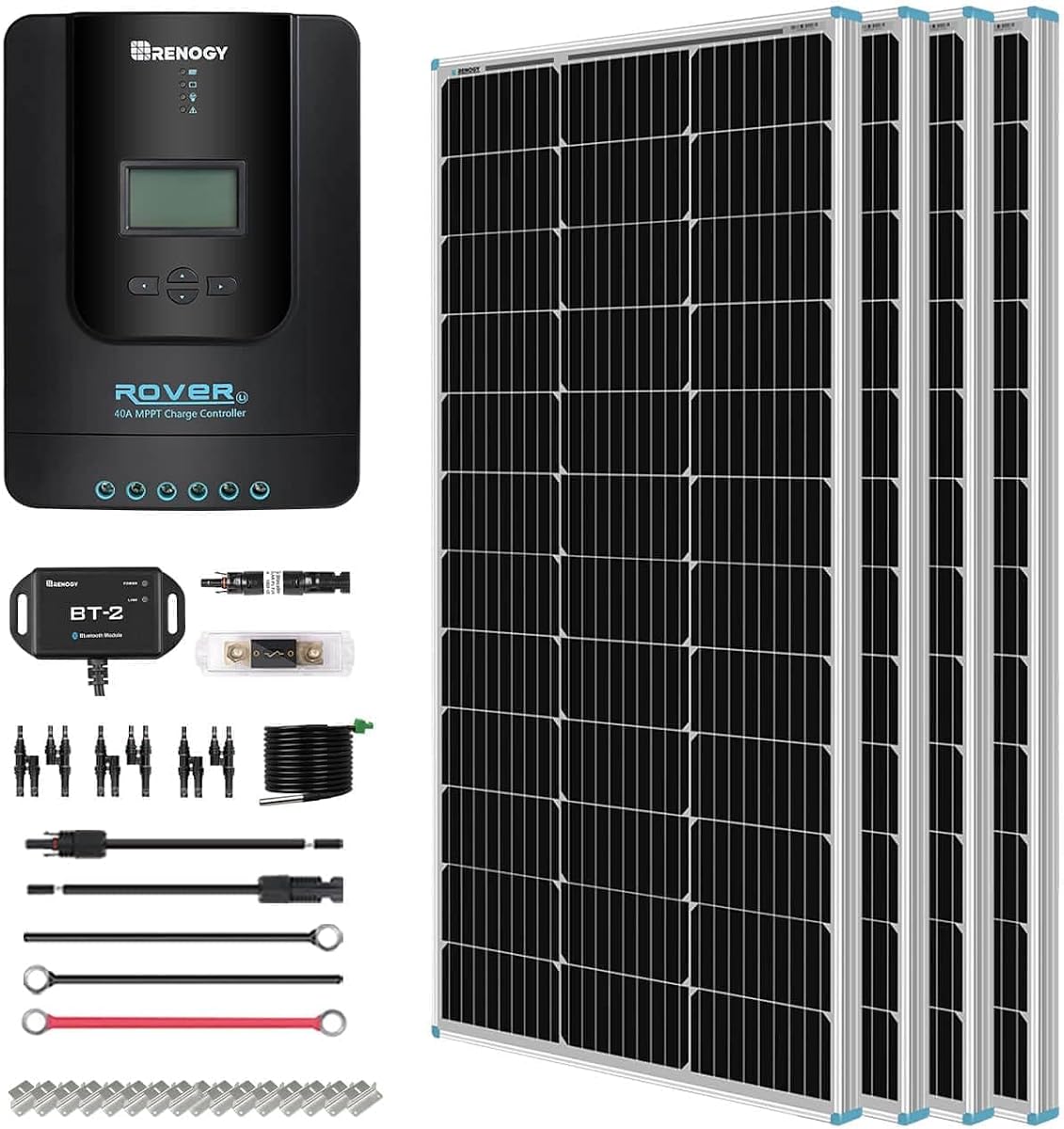
This kit simplifies installation by including a 40A MPPT charge controller alongside high-efficiency panels. It targets beginners needing a complete setup without sourcing separate components. The 32V max battery voltage ensures compatibility with standard RV systems.
We may earn a commission when you buy through this link, at no additional cost to you.
MPPT technology optimizes power harvest, especially in varying light. While it costs more, the bundled hardware saves time and potential wiring errors. The premium components ensure durability and stable charging for your battery bank over many years.
Trade-offs include limited customization compared to building your own system. However, for those prioritizing ease, this kit offers a smooth path to energy independence. It suits first-time solar users who want a reliable, plug-and-play experience.
We recommend it for campers seeking a straightforward transition to solar. Its quality ensures consistent performance. Choose this if you value convenience and want a trusted manufacturer backing your off-grid energy setup.
Includes controller and wiring, reducing the complexity of sourcing compatible parts for your first RV solar project.
MPPT controllers extract maximum power from panels under changing conditions, improving overall energy harvest.
We may earn a commission when you buy through this link, at no additional cost to you.
This panel focuses on ease of installation with pre-drilled holes aligning with common brackets. Its 9.84 ft leads often eliminate extension cables, reducing connection points where failures occur. The sealed junction box protects against rain splashes effectively.
We may earn a commission when you buy through this link, at no additional cost to you.
Monocrystalline cells provide reliable output for 12V or 24V systems. Parallel wiring is recommended for smoother charging. While efficiency is lower, the robust aluminum frame ensures durability. It suits those needing a straightforward, low-maintenance solar addition.
Trade-offs include needing a high-input controller for series setups. However, its weather-resistant design makes it ideal for permanent rooftop use. We recommend it for RV owners who prioritize mechanical reliability over peak efficiency metrics.
Ideal for standard camping trips, this panel delivers consistent energy. Its simple design reduces setup time. Choose this if you want a no-fuss panel that integrates easily into existing RV electrical systems.
Long leads reach control zones without extra connectors, minimizing potential points of electrical failure.
Pre-drilled holes match standard rail mounts, allowing secure attachment without custom fabrication.
We may earn a commission when you buy through this link, at no additional cost to you.
Designed for portability, this foldable panel pairs well with external power stations. Its 23 percent conversion rate ensures strong charging, while IP65 waterproofing handles outdoor elements. The adjustable kickstand optimizes sun capture on the ground.
We may earn a commission when you buy through this link, at no additional cost to you.
Safe charging features protect devices from over-voltage and short circuits. The lightweight design makes transport easy between campsites. While not for roof mounting, it suits transient setups where flexibility matters more than fixed installation.
Trade-offs include needing manual deployment. However, its versatility outweighs this for occasional users. We recommend it for campers who prefer ground deployment. Choose this if you prioritize mobility over permanent mounting.
Ideal for hiking or remote camping, it delivers reliable power. Choose this for easy transport and quick setup in changing locations.
Foldable design fits in vehicle storage, enabling power anywhere from mountain trails to desert campsites.
Auto-reboot and chip protection ensure safe, stable charging even in fluctuating sunlight conditions.
We may earn a commission when you buy through this link, at no additional cost to you.
This model works with nearly all portable power stations, making it versatile for varied setups. Built-in kickstands allow quick setup without tools. The foldable design reduces footprint, saving space in campers while offering efficient 23 percent power generation.
We may earn a commission when you buy through this link, at no additional cost to you.
IP65 waterproofing protects against splashes, though the junction box needs care in heavy rain. Its 21.5 percent efficiency ensures reliable output. While requiring careful handling, it suits users prioritizing plug-and-play convenience over rigid durability.
Trade-offs involve junction box limitations. However, its compatibility with top brands like Jackery makes it a strong option. We recommend it for owners with external stations. Choose this if you want broad device support.
Ideal for mobile campers, it offers quick deployment. Its lightweight frame aids transport. Choose this for flexible power in changing environments.
Connects easily with popular generators, eliminating adapter needs and ensuring seamless energy transfer.
Built-in stands adjust in seconds, enabling rapid setup before sunsets.
We may earn a commission when you buy through this link, at no additional cost to you.
Designed for rugged conditions, this panel features ETFE coating for enhanced weather resistance. IP67 rating ensures dust and water protection. Its 23.5 percent efficiency and multi-port charging support diverse power station needs effectively.
We may earn a commission when you buy through this link, at no additional cost to you.
The accessory pouch adds convenience, while 3-angle stands optimize light capture. While heavier than some foldables, its thermal stability and durability justify the weight. It suits outdoor professionals needing reliable power in harsh terrain.
Trade-offs include weight and price. However, its robust build ensures longevity. We recommend it for users facing harsh elements. Choose this if durability matters most over portability.
Ideal for off-grid camping, it delivers stable energy. Choose this for a tough, weather-resistant solar solution.
Enhances dust and moisture resistance, extending lifespan in harsh environments.
Multiple connectors allow flexible device charging without extra adapters.
We may earn a commission when you buy through this link, at no additional cost to you.
This bifacial panel offers 25.6 percent efficiency, capturing rear light on reflective surfaces. Its TwinCell anti-shade tech minimizes losses from obstacles. Designed for Class B vans, it balances power with compact footprint.
We may earn a commission when you buy through this link, at no additional cost to you.
IP68-rated box and high-strength glass ensure durability. The low temp coefficient reduces heat loss, maintaining output in summer. While requiring reflective installation, it delivers exceptional performance. We recommend it for van-lifers prioritizing efficiency.
Trade-offs include needing specific ground. However, its 25-year warranty ensures reliability. Choose this for high yield. Select it if space and efficiency drive your purchase.
Ideal for van setups, it delivers stable energy. Choose this for maximum power in limited space.
Maintains output during hot days, crucial for summer camping.
Perfect dimensions for Class B vans, optimizing roof energy use.
We may earn a commission when you buy through this link, at no additional cost to you.
This pack offers four 100W panels for flexible distribution across RV roofs. With 25 percent efficiency, it ensures high output. Low-iron glass enhances light transmission, while IP68 protects against weather elements.
We may earn a commission when you buy through this link, at no additional cost to you.
The modular approach allows shading tolerance and easier mounting on curved surfaces. Though wiring requires effort, the flexibility suits complex roof layouts. We recommend it for those needing customized layouts.
Trade-offs include connection complexity. However, durability and high efficiency make it a smart choice. Choose this if you need distributed solar coverage. Pick it for reliable long-term energy.
Ideal for complex setups, it delivers stable power. Choose this for flexible solar integration.
Distributing smaller panels simplifies mounting on irregular RV roof shapes.
IP68 sealing and tempered glass ensure longevity against harsh outdoor conditions.
We may earn a commission when you buy through this link, at no additional cost to you.
Selecting the right 400 watt panel depends on efficiency, size, and durability. This section breaks down key factors to consider for optimal RV energy systems.
Efficiency determines how much sunlight converts to power. Higher percentages like 23-25 percent mean more energy from smaller roofs. N-Type cells generally offer better heat resistance and longer lifespan than older P-Type options.
Look for high-efficiency monocrystalline cells to maximize output in limited space.
Outdoor use demands strong waterproofing. IP65 or IP67 ratings protect junction boxes from rain and dust. IP68 offers superior sealing. Check frame corrosion resistance for long-term durability.
Ensure the panel meets IP65 minimum for reliable outdoor operation.
Roof space varies widely among RVs. Measure available area before buying. Bifacial panels need clearance for rear light capture. Fixed vs foldable impacts setup complexity and storage.
Choose dimensions fitting your roof layout and mounting hardware availability.
MC4 connectors are standard for RV wiring. Check cable length to reach charge controllers. Some kits include controllers; others require separate purchases. Ensure compatibility with your battery voltage.
Verify connectors match your existing system or include adapters.
Heat reduces solar output. Lower coefficients like -0.3 percent per degree maintain efficiency in summer. N-Type panels often have better coefficients than traditional models.
Prioritize low temperature coefficients for consistent summer performance.
Warranties range from 5 to 25 years. Look for output guarantees ensuring 80 percent power after 25 years. Technical support availability matters for troubleshooting.
Select panels with long warranties to protect your investment.
Trees or vents can cause partial shade. Anti-shading tech like TwinCell or ShadowFlux reduces energy loss. Diodes prevent reverse current drain at night.
Pick panels with shade tolerance if your campsite has obstructions.
Fixed panels add to vehicle weight. Lightweight designs matter for roof load limits. Foldable options trade stability for mobility.
Balance weight capacity with your mounting style needs.
Install panels on a clean, flat surface to maximize sun exposure. Align them toward true south in the Northern Hemisphere for optimal generation. Secure mounting hardware tightly to prevent wind damage.
Regularly clean the surface with water and a soft cloth to remove dust or debris. Avoid abrasive materials that scratch glass. Check connectors for corrosion every few months and tighten any loose wiring.
Monitor your charge controller to ensure proper battery charging. If output drops unexpectedly, inspect for new shade or damage. Store foldable panels dry indoors when not in use to prolong their lifespan.
Yes, a 400 watt system can power essential appliances if paired with sufficient battery storage. Efficiency depends on usage patterns and sunlight availability. Consider adding extra panels if you run high-draw devices like air conditioners frequently.
Yes, all solar panels require a charge controller to regulate battery charging safely. MPPT controllers are recommended for higher efficiency. Avoid connecting panels directly to batteries to prevent damage.
Ideally, aim for 5 to 6 peak sun hours daily. Output varies by location and weather. A 400 watt panel might produce 2000Wh on a bright day. Cloudy conditions will reduce generation significantly.
Bifacial panels can increase output by 10 to 30 percent when mounted over reflective surfaces. If space is limited, they are often worthwhile. Ensure your setup allows rear light capture to realize benefits.
Mixing brands is possible but requires matching voltage and current specs. Mismatched panels reduce efficiency. Ideally use identical panels or ensure specifications align closely for balanced performance.
Look for tempered glass panels rated against hail. IP ratings and frame strength help. Install at an angle to reduce impact area. Insurance may cover damage for permanent installations.
Yes, extreme heat reduces voltage and output. Panels with low temp coefficients maintain efficiency. Install with airflow underneath to cool them. Shade helps during high summer temperatures.
The top 400 watt panels balance efficiency and durability for RV energy needs. JJN leads with bifacial output, while budget options like 12V panels offer value. Renogy delivers premium shade resilience for tough environments.
Prioritize efficiency ratings and weather resistance for reliable long-term performance. Consider your roof space, battery capacity, and shading conditions. A proper charge controller ensures safe charging for your specific system.
Prices vary by retailer and promotions. Always check current costs before purchasing. Our selections provide strong starting points for off-grid energy independence. Choose the model that best fits your camping lifestyle.