
Workman A28
4.5Editor score
PL-259 Male/Female ends
Side ground screw included
Simple installation design
This comprehensive guide compares the top antenna lightning arrestor models for 2026, evaluating protection features, connector types, and signal integrity for
Protecting your communication equipment from electrical surges is essential for long-term reliability. An antenna lightning arrestor provides a critical barrier against voltage spikes caused by nearby strikes or static buildup.
We evaluated ten top-rated models based on connector compatibility, insertion loss, and surge capacity. Our analysis focuses on real-world performance data and user feedback to ensure you choose the right protector.
Each selection highlights key specifications and ideal use cases to help you make an informed decision. Note that pricing and availability may vary over time as market conditions change.
4.5Editor score

4.6Editor score

4.8Editor score
The following table provides a side-by-side comparison of all ten selected products. It highlights key technical specifications and connector types to help you differentiate between models quickly.


The Diamond Antenna SP1000 stands out as a top contender for serious operators. With a 4.6 rating, it offers reliable wideband performance and extremely low loss. This model is designed to safeguard radios and transceivers from destructive surges.
We may earn a commission when you buy through this link, at no additional cost to you.
Its impulse wave discharge capacity of 6000 Amps ensures it can handle significant energy spikes. The insertion loss remains under 0.3 dB, preserving signal integrity. A replaceable surge arrester element adds long-term value and usability.
While it costs more than basic options, the investment pays off in equipment safety. Some users note that grounding must be done correctly to maximize effectiveness. Proper installation is key to unlocking its full protective potential.
Buy this if you need proven protection for base stations or mobile setups. It balances performance and durability well. This is a solid choice for those prioritizing equipment longevity.
The minimal insertion loss ensures your radio signals remain strong and clear even with the device inline. This is crucial for high frequency communications.
Unlike some sealed units, this model allows you to replace the surge element. This feature extends the usable life of the arrester significantly.
We may earn a commission when you buy through this link, at no additional cost to you.
The Workman A28 provides essential protection without breaking the bank. Rated 4.5 stars, it is a popular choice for CB and Ham base antennas. It attaches between your radio and antenna for basic surge diversion.
We may earn a commission when you buy through this link, at no additional cost to you.
Its simplicity is its greatest strength. The PL-259 Male/Female connectors ensure compatibility with standard coax. A ground screw on the side allows for quick connection to an earth ground.
It lacks advanced features like replaceable elements or high surge ratings. However, for casual operators, it offers reasonable safety. It is a practical first step for protecting cheaper equipment.
Choose this if you are on a tight budget but need protection. It covers the basics well for entry level setups. This is an economical solution for general use.
The straightforward design means you can install it quickly without specialized tools. Just connect the coax and ground screw to get started.
For those with lower value equipment, this unit offers a risk-free way to add a layer of security. It balances cost and function effectively.
We may earn a commission when you buy through this link, at no additional cost to you.
The Diamond Antenna SP3000 is the top rated option in this guide with 4.8 stars. It supports DC to 3000 MHz frequencies making it versatile for many setups. The 200W power handling suits high power stations.
We may earn a commission when you buy through this link, at no additional cost to you.
Its construction feels professional and robust. The N-Type Female/Female connectors are standard for high performance applications. It provides a reliable shield against voltage spikes during storms.
The higher cost reflects its superior build quality and frequency range. It is not intended for simple CB radios. This model is best for serious enthusiasts who demand top performance.
Select this for your main high power station or critical infrastructure. It represents the best quality available here. Investing in this unit protects your most valuable assets.
Handling 200W of power ensures it can sit inline with transmitters without overheating. This is essential for high wattage operations.
From DC up to 3000 MHz, this unit covers almost all ham and commercial bands. It offers future proofing for your antenna system.
We may earn a commission when you buy through this link, at no additional cost to you.
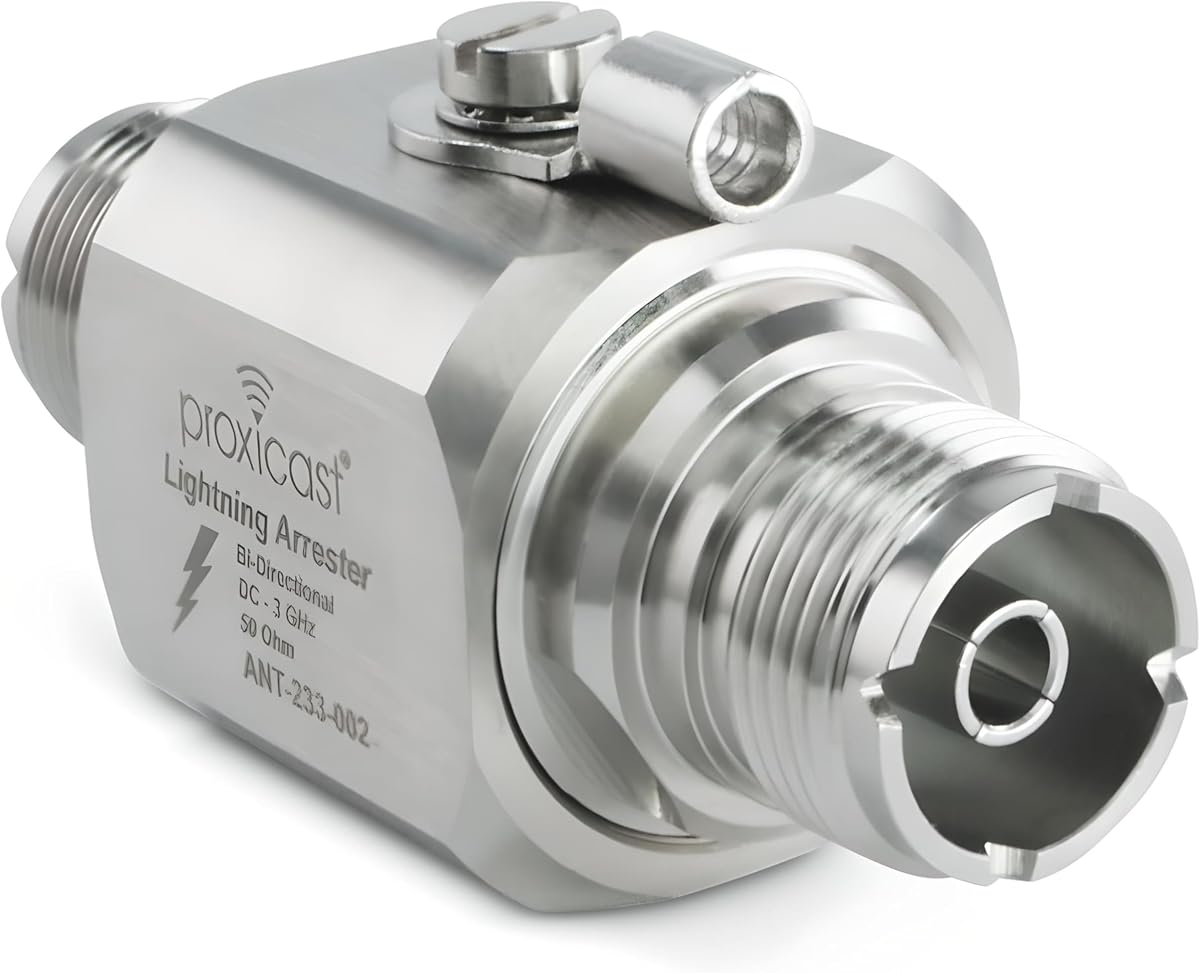
This Proxicast model is rated 4.6 stars and focuses on UHF two-way and amateur radios. It features SO-239 connectors which are common for base stations. The 230V gas discharge tube offers solid surge protection.
We may earn a commission when you buy through this link, at no additional cost to you.
Its bi-directional protection ensures safety from both incoming and outgoing surges. The low RF insertion loss preserves signal quality effectively. It is suitable for in-line use on outdoor setups.
It lacks a replaceable element compared to the Diamond models. Once the tube fails, the unit must be replaced. However, the price point remains competitive for these features.
Use this for CB or two-way radio setups requiring SO-239. It balances quality and cost well. This is a strong option for standard amateur stations.
The connectors match standard UHF plugs making installation straightforward. You can integrate it into existing coax cables easily.
Designed for outdoor use, it withstands weather exposure better than indoor protectors. This extends the service life significantly.
We may earn a commission when you buy through this link, at no additional cost to you.
Rated 4.4 stars, this model is designed for modern cellular and WiFi applications. The N-Male and N-Female connectors support DC to 6 GHz signals. It protects 4G, 5G modems, and routers effectively.
We may earn a commission when you buy through this link, at no additional cost to you.
Its bi-directional protection shunts damaging surges to ground safely. The unit is bulkhead mountable which aids in organized setups. It works well with Helium miners and other radio devices.
Some users prefer higher ratings but the bandwidth compensates. It is bulkier than standard UHF units which may limit tight spaces. Ensure your system uses N-type connectors before buying.
Choose this for IoT or cellular modem protection. It handles high frequency signals well. This is a reliable pick for modern tech setups.
With a range up to 6 GHz, it covers modern WiFi and cellular bands. This ensures your data devices stay safe during storms.
The bulkhead design allows it to be mounted on panels or walls. This keeps the antenna system organized and neat.
We may earn a commission when you buy through this link, at no additional cost to you.
With a 4.7 rating, this N-Type arrestor is highly valued for its versatility. It protects HAM equipment and GPS receivers from surges. The range covers 0 to 6 GHz making it widely compatible.
We may earn a commission when you buy through this link, at no additional cost to you.
The 90V discharge tube offers multi-strike capability for better safety. It features low insertion loss ensuring signal strength is maintained. Connect it directly to your feedline and earth ground.
It is slightly less robust than premium branded models. But for GPS or cellular antennas, it performs reliably. The cost is very reasonable for the bandwidth provided.
Buy this for GPS or outdoor antenna protection. It offers a great balance of specs and price. This is a solid alternative to expensive branded units.
GPS receivers are sensitive to voltage spikes. This unit effectively prevents damage to these small devices during electrical storms.
Supporting frequencies from DC to 6 GHz allows use with many modern systems. It is a versatile choice for diverse setups.
We may earn a commission when you buy through this link, at no additional cost to you.
This XRDS-RF unit scores 4.6 stars for UHF two-way protection. It uses PL-259 connectors which are standard for ham radios. The insertion loss is less than 0.4 dB ensuring clean signals.
We may earn a commission when you buy through this link, at no additional cost to you.
Its VSWR is below 1.2 which is excellent for signal flow. The body is brass nickel plated for durability against weather. It is easy to install between amplifier and antenna.
It requires an external ground cable which is not included. The frequency range is limited to 500MHz so check your needs. Still it is a robust choice for lower frequencies.
Use this for CB or ham base stations. It handles low frequencies well. This is a practical choice for standard amateur setups.
A VSWR of 1.2 or less ensures minimal reflection. This helps maintain efficient power transfer through your radio line.
Nickel plating on brass prevents corrosion over time. This keeps the connector stable even after years of exposure.
We may earn a commission when you buy through this link, at no additional cost to you.
Rated 4.6, this unit is designed with safety and durability in mind. The brass outer conductor improves hardness and corrosion resistance. PTFE material protects the inner core effectively.
We may earn a commission when you buy through this link, at no additional cost to you.
It offers wide bandwidth and high interference immunity for reliable use. Installation through an enclosure wall is simple. It fits GSM base stations and walkie-talkie systems well.
The lack of advanced specs like specific voltage ratings may limit experts. But for standard applications it works as advertised. The service life is expected to be long.
Select this for general electrical equipment protection. It provides broad compatibility across systems. This is a good choice for GSM base use.
PTFE insulating material safeguards the signal path from external factors. This helps maintain stable signal connections over time.
Compatible with satellite reception and RF transceivers. This makes it a flexible addition to many communication projects.
We may earn a commission when you buy through this link, at no additional cost to you.
This RAIGEN model earns a 4.8 rating for professional deployments. It protects IoT infrastructure and cell boosters effectively. The range covers 0 to 6 GHz with exceptional low loss.
We may earn a commission when you buy through this link, at no additional cost to you.
Its replaceable gas tube ensures continuous protection after strikes. It includes a ground lug for proper bonding. The brass plated needle maintains optimal signal connection.
The ground cable is not included requiring a separate purchase. For installers the price fits the professional quality. It covers almost every frequency band you might need.
Use this for off-grid solar or fleet tracking. It is built for harsh outdoor conditions. This is a premium choice for tech deployments.
Sensory gateways and miners need steady power. This unit shields them from surges that could cause network outages.
The included lug simplifies bonding to building ground systems. This ensures safety compliance and reliable surge diversion.
We may earn a commission when you buy through this link, at no additional cost to you.
Rated 4.5 stars, this model is ideal for TV and satellite use. It features F-Male and F-Female connectors for RG6 lines. The 75 Ohm impedance matches standard cable systems.
We may earn a commission when you buy through this link, at no additional cost to you.
Bi-directional protection ensures safety from electrical surges. It is suitable for in-line use with 4G boosters too. The DC pass-through works well with powered setups.
The impedance must be matched to your equipment. It does not work with 50 Ohm systems. But for home entertainment it provides essential safety.
Select this for home cable or TV protection. It keeps your receivers safe from surges. This is a reliable pick for entertainment centers.
F connectors are standard for coaxial TV cables. This unit plugs directly into your satellite dishes or antennas.
The 75 Ohm rating ensures no signal reflection occurs. This preserves picture quality and data transmission reliability.
We may earn a commission when you buy through this link, at no additional cost to you.
Selecting the right lightning arrestor requires understanding your system's specific needs. The following factors help you evaluate the best option for your equipment.
The connector type determines compatibility with your existing antenna cables. Common types include SO-239, N-Type, and F-Type connectors. Ensure the arrestor matches your radio's port exactly.
Choose connectors that match your current hardware to avoid extra adapters.
Impedance is measured in Ohms and affects signal transfer. Most radio equipment uses 50 Ohms while TV uses 75 Ohms. Mismatched impedance can cause signal degradation.
Always check your equipment impedance before buying an arrestor.
Modern arrestors often support wide bands from DC to 6 GHz. Ensure the model covers your operating frequencies such as 2.4GHz or 900MHz. Wider ranges offer future proofing.
Look for bandwidth that includes your current and planned bands.
Insertion loss is the signal reduction caused by the device. Lower values below 0.5 dB are preferred to maintain signal strength. This is critical for high frequency systems.
Select units with minimal insertion loss for best performance.
Surge capacity indicates how much energy the device can handle. Higher Amps ratings like 6000 Amps offer better protection during severe storms. This ensures reliability during major electrical events.
Prioritize higher impulse discharge capacity for better safety.
Outdoor units must resist corrosion from rain and sun. Brass or nickel plated bodies are standard for durability. Ensure the unit is rated for permanent outdoor mounting.
Choose weather resistant materials for long outdoor life.
Proper grounding is essential for the arrestor to work. Some units include a ground screw or lug while others require a separate cable. Verify you have a path to earth ground.
Ensure you can connect the arrestor to an earth ground properly.
Some high end models feature replaceable gas discharge tubes. This allows you to service the unit after a major surge event. Non-replaceable units must be discarded after use.
Consider replaceable elements if you experience frequent storms.
Install the arrestor between your antenna feedline and the radio device. Ideally place it at the point where the cable enters your building for best protection. Keep the path to ground as short as possible.
Connect a grounding wire securely to the arrestor's ground screw. Ensure this wire runs directly to an earth ground rod. Do not rely on the coax shield alone for grounding.
Inspect the unit annually for signs of corrosion or damage. If you live in a storm prone area replace the unit every few years. Proper care ensures reliable protection during severe weather.
No arrestor can guarantee absolute safety during a direct strike. However, they significantly reduce the risk of damage by diverting surges. Always combine with proper grounding and disconnect equipment if possible.
The difference lies in the impedance matching for signal transmission. 50 Ohm is standard for radio while 75 Ohm is for cable TV. Using the wrong type can cause signal loss.
Most units do not include a ground cable so you must buy one separately. Ensure the cable is thick enough to carry the surge current safely. Check the product details for included items.
It is generally better to use one arrestor per antenna feedline. This ensures each line gets individual protection. Using one for multiple lines can leave some unprotected.
Install it inline between the antenna connector and the radio port. Then connect the ground screw to your grounding system. Ensure the connectors are tight to prevent signal leaks.
Outdoor units are built to withstand weather elements like rain and UV. Indoor units may not have the same weatherproofing. Use outdoor rated models for external antenna setups.
The device shunts the energy to ground but may get damaged. Check the indicator or visual signs if your model supports replacement. Replace it after a major storm to ensure safety.
This guide covered ten top options for protecting your radio and signal gear. Whether you need budget or premium models there is a suitable choice here.
Prioritize connector type and grounding compatibility to ensure safety. Investing in a quality unit protects your expensive equipment from unpredictable surges.
Prices may change as market conditions vary so check current listings before buying. Stay safe and protect your setup effectively today.
