
HiLetgo 3pcs ESP8266
4.2Editor score
Affordable three-pack option
Supports AP and STA modes
Compact transceiver design
Explore the top Arduino WiFi Module options for your projects. We compare features, connectivity, and performance to help you choose the perfect wireless
Selecting the right wireless connectivity solution is crucial for modern embedded projects. An Arduino WiFi Module enables seamless communication with networks, allowing your devices to send data or receive commands remotely without complex wiring.
Our team analyzed the leading options available on the market today. We evaluated processing power, connection stability, ease of use, and community support to compile this definitive list for developers and hobbyists alike.
Each selection highlights specific strengths suited for different project needs. Whether you need advanced features or simple connectivity, this guide shows you what to expect. Keep in mind that product availability and offers can change over time.
4.2Editor score

4.7Editor score

4.5Editor score
This side-by-side comparison breaks down the key specifications of each module to help you find the perfect fit for your specific IoT or embedded application needs.



This board represents the cutting edge of the Arduino ecosystem. With a stellar rating, it stands out for its powerful dual-core architecture and rich feature set designed for complex projects.
We may earn a commission when you buy through this link, at no additional cost to you.
The combination of the Renesas RA4M1 and ESP32-S3 provides incredible flexibility. You get robust wireless connectivity alongside industrial features like CAN and analog precision for demanding applications.
While the price is higher than basic modules, the integrated LED matrix and USB-C make it easier to prototype without extra shields. It simplifies wiring significantly.
This is the perfect pick for engineers or hobbyists tackling serious IoT work. It combines ease of use with professional-grade specs for reliable development results.
The built-in Wi-Fi and Bluetooth 5.0 ensure your device stays connected reliably. Meanwhile, CAN support allows direct integration with automotive or industrial sensor networks.
The 12×8 LED Matrix allows you to display status or text immediately. This removes the need for an external screen during testing phases.
We may earn a commission when you buy through this link, at no additional cost to you.
If you need reliable connectivity without breaking the bank, this option is excellent. It offers solid performance for basic IoT tasks at a very accessible price point.
We may earn a commission when you buy through this link, at no additional cost to you.
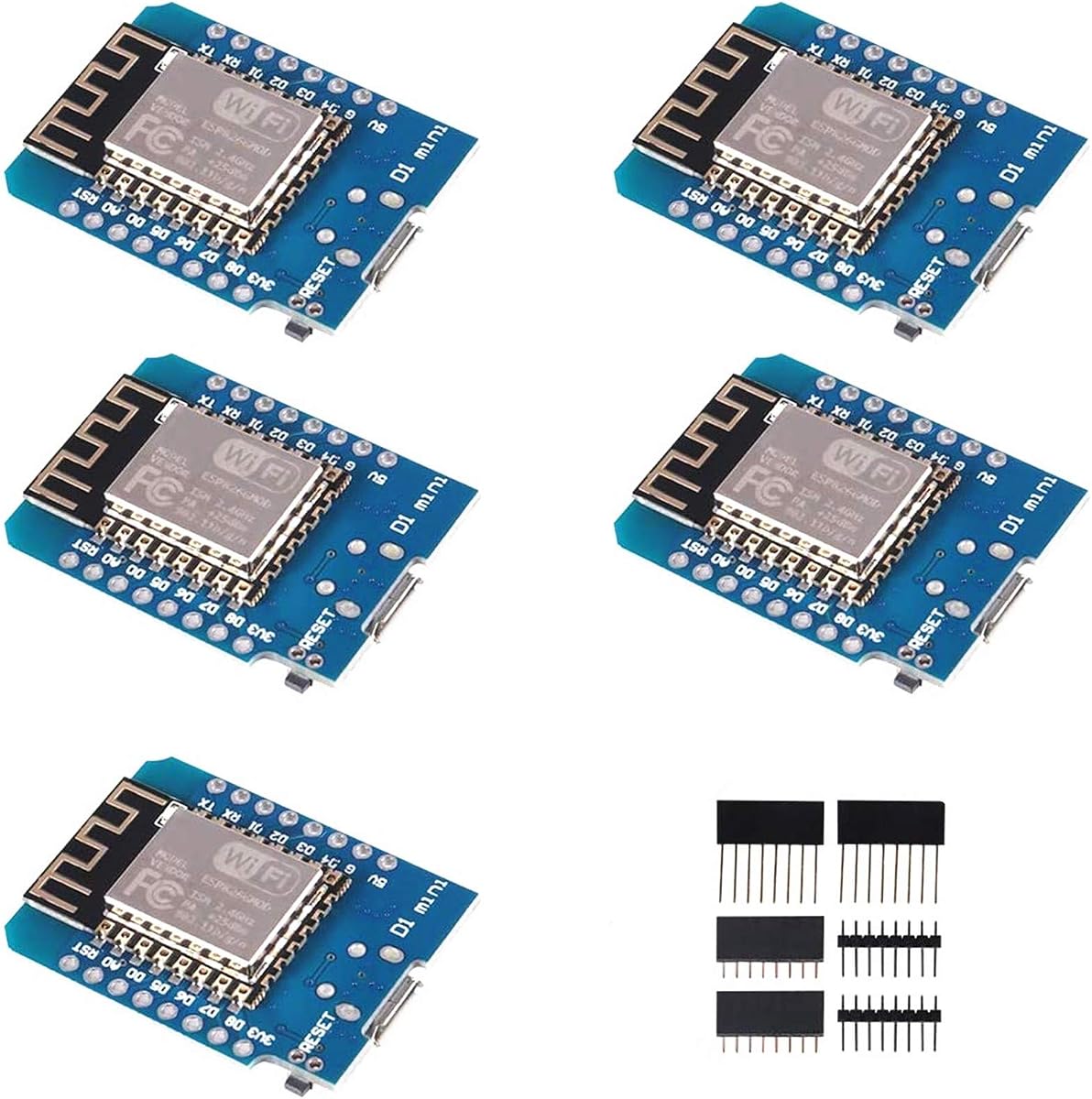
The ESP8266 chip is known for its processing capabilities. You get three units, allowing you to prototype multiple devices or keep spares for repairs or testing.
The main limitation is the voltage sensitivity. You must use 3.3V logic carefully. Also, it lacks the speed of newer chips like the ESP32.
Buy this for simple home automation or sensor networks. It is a proven workhorse that delivers consistent results for budget-conscious makers.
Supporting AP, STA, and combined modes gives you flexibility. You can host a server or connect to an existing router easily.
Its small size makes it ideal for wearable electronics or tight enclosures. You save space while keeping essential wireless features.
We may earn a commission when you buy through this link, at no additional cost to you.
This module offers professional-grade features in a compact form. It is perfect for projects needing advanced connectivity and flexibility without needing large development boards.
We may earn a commission when you buy through this link, at no additional cost to you.
The ESP32-S3 chip supports high-speed processing and Bluetooth 5.0. This makes it suitable for data-heavy applications and secure smart home interactions.
You need to solder headers yourself to get started. While slightly extra work, the USB-C port and Python support make programming much faster once ready.
Ideal for developers who want modern standards. Whether you need custom input devices or robust IoT networks, this board handles it well.
With Bluetooth 5.0, you get better range and stability. This ensures your devices remain connected even with interference nearby.
Supporting MicroPython allows for rapid prototyping. If you prefer Python over C++, this is a great advantage for your workflow.
We may earn a commission when you buy through this link, at no additional cost to you.
This module is a staple in the Arduino community. It offers solid performance for WiFi projects with more storage than older versions.
We may earn a commission when you buy through this link, at no additional cost to you.
The 4MB Flash memory allows for storing larger sketches and data. The signal strength is also stronger, improving connection reliability in challenging environments.
You will need a level shifter or breakout board to use it easily. The pins are tight and not standard 5V tolerant without extra care.
Best for data logging or storing configuration settings. If you need extra memory on a small chip, this is a reliable choice.
The improved signal range helps maintain connections over longer distances. This is crucial for outdoor or wide-area monitoring setups.
You can program this directly through the Arduino IDE. Just select the generic board option to get started quickly.
We may earn a commission when you buy through this link, at no additional cost to you.
This five-pack offers great value for makers building networks of sensors. Having multiple modules allows you to scale your project without constant reordering.
We may earn a commission when you buy through this link, at no additional cost to you.
They work well in industrial settings due to stable voltage support. The SPI flash ensures quick data retrieval during operations.
Just ensure your system provides 3.3V to avoid damage. The small form factor requires careful soldering for reliable connections.
Great for schools or prototyping labs needing spares. You get enough units to share or use across different prototypes easily.
With five units, you can build entire sensor networks instantly. This reduces the need to source individual components later.
These units handle industrial control environments well. The design ensures they stay functional even under continuous operation.
We may earn a commission when you buy through this link, at no additional cost to you.
This bundle offers robust performance for complex tasks. The dual-core processor allows you to run multiple processes simultaneously without lag.
We may earn a commission when you buy through this link, at no additional cost to you.
Bluetooth 4.2 adds another layer of connectivity. Combined with Wi-Fi, you get flexible options for connecting to phones or sensors directly.
The USB-C port modernizes the workflow. While it is a bit larger than the ESP-01, the features justify the size increase.
Best for automation logic or sensor processing. If you need speed and wireless versatility, this bundle is a strong contender.
These boards support low-power modes effectively. This helps extend battery life for portable devices significantly.
OTA support means you can update code remotely. This is essential for deployed devices where physical access is hard.
We may earn a commission when you buy through this link, at no additional cost to you.
A solid choice for those who need multiple units. The RF calibration ensures each unit performs consistently for reliable connectivity.
We may earn a commission when you buy through this link, at no additional cost to you.
These are built to last with reusable materials. This makes them suitable for projects where you might swap or reuse components frequently.
The RF module is calibrated for optimal performance. You can expect stable signal transfer in typical home settings.
Ideal for smart home projects needing multiple nodes. You get consistent quality across all four units in the pack.
Self-calibrated RF ensures stable transmission. This reduces the risk of connection drops during critical operations.
High-quality materials make these units reusable. This helps reduce waste when prototyping different configurations.
We may earn a commission when you buy through this link, at no additional cost to you.
This five-pack provides generous storage for data-heavy projects. The 4MB Flash allows for complex sketches and persistent data storage.
We may earn a commission when you buy through this link, at no additional cost to you.
They use DOUT SPI protocol which ensures fast communication. The baud rate is standardized to simplify configuration in your code.
Be strict about voltage limits to avoid frying them. They work well for IoT applications needing consistent performance and storage.
Ideal for logging or caching data locally. The high memory count and low price make this a smart bulk buy.
DOUT protocol ensures efficient data transfer. This is vital for applications needing quick response times.
Fixed baud rate simplifies debugging. You do not need to guess settings when connecting to your computer.
We may earn a commission when you buy through this link, at no additional cost to you.
This mini board offers more pins than standard modules. It is easier to wire up directly without a breakout board for many sensors.
We may earn a commission when you buy through this link, at no additional cost to you.
The onboard power supply simplifies power distribution. You can plug in 5V directly and it regulates to 3.3V automatically.
Just ensure you use a quality power source. The USB connection makes it easy to connect to PCs for debugging.
Great for home automation or sensor networks. The extra pins allow you to connect multiple components easily.
With 11 digital pins, you can connect many sensors. This eliminates the need for multiplexers in simple projects.
The onboard power supply handles voltage conversion. This saves space and reduces component count in your design.
We may earn a commission when you buy through this link, at no additional cost to you.
This bulk pack is ideal for labs or large scale deployments. With ten units, you have everything you need for a distributed sensor network.
We may earn a commission when you buy through this link, at no additional cost to you.
They boast strong processing capabilities and ample storage. This ensures your devices handle tasks efficiently without slowdowns.
The versatile modes allow flexible network design. Whether you need access points or clients, these modules adapt well.
Perfect for educational kits or manufacturing. The high rating reflects consistent quality across the entire batch.
Ten units allow for immediate large testing. This reduces the time spent on sourcing components for large runs.
The perfect rating suggests high reliability. You can count on these units to work as expected out of the box.
We may earn a commission when you buy through this link, at no additional cost to you.
Choosing the right WiFi module depends on your project complexity, power budget, and connectivity requirements.
Modern projects often require significant processing power. Modules with dual-core processors like the ESP32-S3 handle multiple tasks better than single-core chips.
Look for higher clock speeds and advanced cores if your project involves data heavy tasks.
Storage is critical for logging data or running complex code. While some modules offer only 1MB, others provide 4MB or more.
Ensure your chosen module has enough memory for your sketches and any data caching you plan to do.
Most modules operate at 3.3V, while Arduinos run at 5V. You must use level shifters if connecting directly.
Check the voltage compatibility to avoid damaging your modules during wiring.
Consider both Wi-Fi and Bluetooth. Some modules offer Bluetooth 5.0 for better range and stability.
Choose a module that offers the specific wireless protocols your project needs.
Space is often limited in wearable or portable projects. Compact modules save space but may lack headers.
Evaluate if you need a breakout board for the pin layout.
Some modules require extra steps to flash code. Boards with USB-C and standard IDE support are easier to use.
Select options that match your coding preferences like Python or C++.
Packs often offer better value per unit than buying single boards. Consider how many units you need for your full prototype.
Buying bulk can save money and shipping time for larger projects.
Connect the module to a stable 3.3V power source. Ensure your logic levels match to prevent damage to the module.
Install the necessary libraries and board definitions in the IDE before programming. This ensures the compiler recognizes the hardware correctly.
Avoid touching exposed pins during power-up to prevent shorts. Keep modules in static-free environments during storage to preserve components.
Yes, but you need level shifters. The modules use 3.3V logic, so direct connection can damage pins. Ensure you bridge the voltage difference safely.
Modules with low-power modes like the ESP32 are best. Look for deep sleep features to conserve energy while maintaining connectivity.
Many do, especially ESP32 variants. Check the specs to confirm the version of Bluetooth supported for your specific needs.
Storage varies from 1MB to 4MB. Larger storage allows for more complex applications and data logging without external memory.
Some boards come without headers. You may need to solder them yourself to connect wires easily.
They are suitable for prototypes. For mass production, ensure you have the correct certifications and supply chain reliability.
Whether you choose the powerful UNO R4 or budget ESP8266, ensure it matches your project goals. Each option provides a balance of speed and cost.
Prioritize connectivity requirements and ease of use. The right module can save time during development and ensure long-term reliability.
Check current stock and offers before ordering. Prices and availability change regularly, so verify details before you finalize your purchase.
