
Sipeed Tang Nano 20K
4.5Editor score
20K LUT4 FPGA Chip
Linux RISC-V Support
MicroSD Card Slot
Explore the top Fpga Retro Consoles of 2026. This guide compares ten expert systems for emulation, development, and portable gaming performance.
Fpga Retro Consoles offer enthusiasts a unique blend of historical accuracy and modern performance. Unlike software emulators, these devices use hardware replication to deliver pristine timing and visual fidelity. They are ideal for collectors who demand authenticity in every pixel and sound channel.
We evaluated ten leading systems based on hardware flexibility, output quality, and developer support. Our analysis covers everything from compact handhelds to powerful desktop boards. Each pick balances cost, performance, and ease of use to help you find the right fit.
Every review highlights specific strengths and potential limitations for real-world usage. Prices and availability change frequently so check current listings before buying. We aim to provide clear insights into which Fpga Retro Consoles match your specific gaming or development needs.
4.5Editor score
4.8Editor score

5.0Editor score
This side-by-side comparison highlights key specifications across all ten selected Fpga Retro Consoles. It helps you quickly identify differences in processing power, connectivity options, and form factors to make an informed decision.



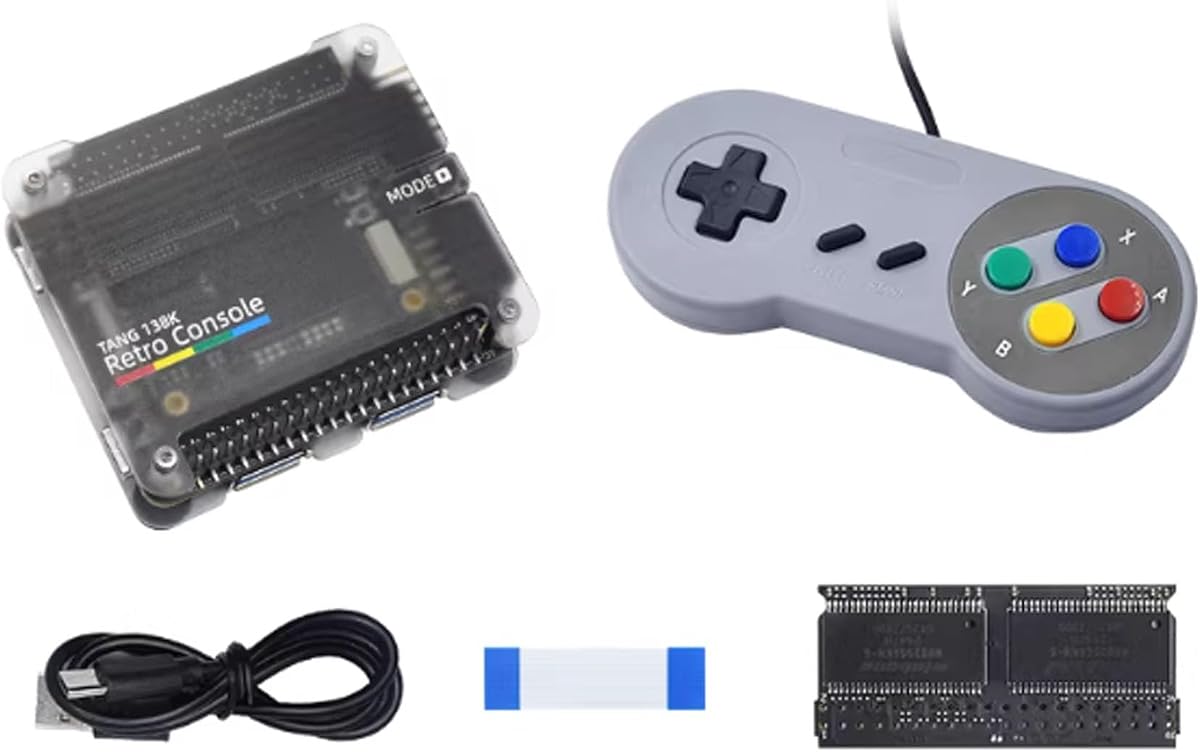
This FPGA development board stands out as the top pick for serious retro gaming enthusiasts. With 138K LUT4 logic cells, it handles complex emulation cores with ease. The included RISC-V core enhances its capabilities beyond just gaming.
We may earn a commission when you buy through this link, at no additional cost to you.
The HDMI output delivers crisp 1080P visuals suitable for modern displays. Its compact 65x56mm design makes it easy to integrate into custom enclosures. Dual PMOD ports allow for extensive hardware customization and expansion.
While powerful, it requires some technical knowledge to set up effectively. Users need to manage their own game libraries via SD card. This trade-off ensures complete control over the system configuration.
Ideal for developers and tinkerers who want maximum flexibility. If you value performance and expandability over plug-and-play simplicity, this is the best choice available.
The 138K LUT4 architecture supports demanding cores like Amiga and NES with near-perfect timing accuracy.
Fanless design ensures silent operation, making it perfect for living room setups without noise interference.
We may earn a commission when you buy through this link, at no additional cost to you.
This model balances cost and performance for developers interested in Linux environments. It includes a BL616 MCU that supports running TangCore firmware for debugging purposes. The USB 3.0 ports facilitate fast data transfers.
We may earn a commission when you buy through this link, at no additional cost to you.
It supports multiple emulator cores including NESTang and GBATang. The board allows for quick switching between different retro game configurations. Its small size makes it portable for various development projects.
The system might struggle with very high-end FPGA designs compared to the 138K version. Users must manage their own OS installation and game libraries. This requires a basic understanding of Linux commands.
Great for those who want a development-focused console. It offers a solid platform for experimenting with FPGA programming and Linux integration simultaneously.
Runs Linux efficiently providing a familiar environment for developers used to standard operating systems.
Fast USB connectivity allows for quick loading of assets and efficient peripheral communication.
We may earn a commission when you buy through this link, at no additional cost to you.
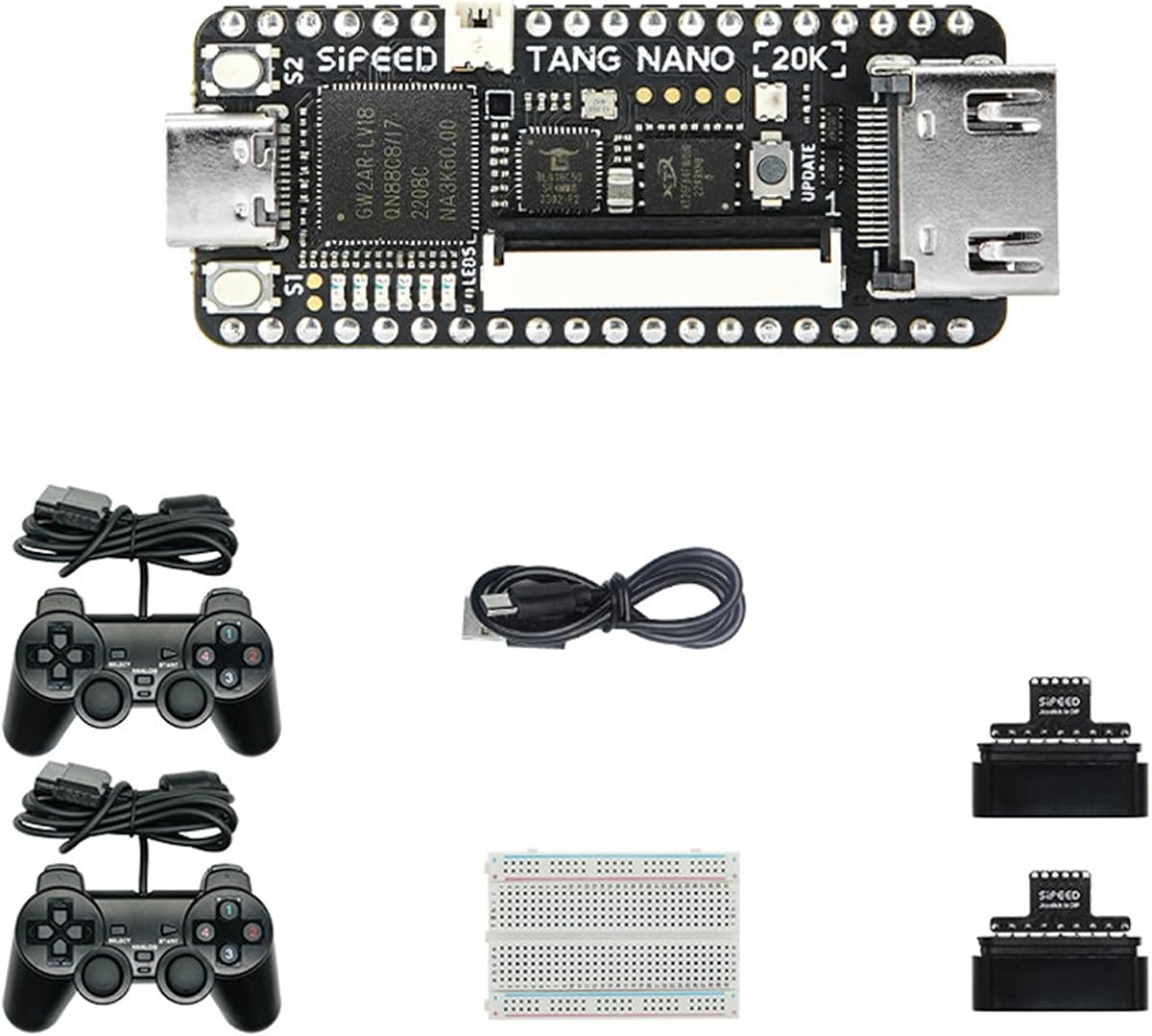
An excellent entry point for those new to FPGA retro consoles. The 20K LUT4 chip handles 8-bit emulation well. It runs a Linux RISC-V system which opens up customization options for users.
We may earn a commission when you buy through this link, at no additional cost to you.
Features like microSD support and RGB LCD connections make it versatile. The onboard debugger supports JTAG functionality for development work. This ensures you can test your own designs easily.
Performance may lag for advanced 32-bit systems. The lower logic count limits how many features you can run simultaneously. However, for standard retro titles, it performs admirably.
Perfect for hobbyists on a budget. It provides enough power to enjoy classics without breaking the bank or requiring complex setups.
Runs a Linux system on RISC-V architecture offering a familiar OS environment for hobbyists.
Low price point makes FPGA development and retro gaming accessible to a wider audience.
We may earn a commission when you buy through this link, at no additional cost to you.
This kit offers a complete package for starting FPGA development projects. It includes the BL616 chip for debugging purposes which simplifies the learning curve. HDMI output ensures easy connection to modern screens.
We may earn a commission when you buy through this link, at no additional cost to you.
Supports multiple game emulator cores and display types. The microSD slot allows for flexible storage management. Linux RISC-V system supports seamless retro gaming experiences.
It lacks the raw power of higher-end models. Users might find the setup process challenging without prior Linux experience. However, community documentation provides extensive help.
Ideal for beginners looking for an all-in-one solution. It balances functionality and ease of entry for those curious about FPGA gaming.
Includes necessary components to start using the board immediately without buying extra parts.
Uses open source Linux software allowing full customization of the system interface and apps.
We may earn a commission when you buy through this link, at no additional cost to you.
Designed as a versatile single board computer for retro gaming. It supports driving multiple screens which is rare at this price point. The onboard SDRAM ensures smooth operation for lightweight emulators.
We may earn a commission when you buy through this link, at no additional cost to you.
Supports various emulator cores and custom designs easily. The BL616 debugger aids in development and testing. Open source nature means full transparency and community contributions.
Does not include preloaded games so users must source their own. Input options are standard and may require adapters for arcade sticks. This flexibility comes with minor setup effort.
Best for tinkerers who want multi-screen setups. It is a powerful tool for learning FPGA development while enjoying classic games.
Capability to drive multiple displays allows for unique dual-screen retro gaming experiences.
Integrated debugger tools make it easier to troubleshoot code and hardware issues.
We may earn a commission when you buy through this link, at no additional cost to you.
A unique handheld focused on both gaming and coding. It comes with over 300 preloaded games providing immediate entertainment. The FX chip allows for custom game creation using C++.
We may earn a commission when you buy through this link, at no additional cost to you.
Features a USB-C port for modern connectivity and multiplayer. The credit card size makes it highly portable for travel. OLED screen ensures crisp visuals in any lighting.
Not suitable for 16-bit or 32-bit games. The screen size limits detail but fits the retro theme well. Requires some patience to master coding features fully.
Perfect for students and families interested in STEM. It balances nostalgia with modern educational tools effectively.
Built-in coding features allow users to learn programming while playing classic games.
Modern USB-C port supports fast data transfer and easier multiplayer connections.
We may earn a commission when you buy through this link, at no additional cost to you.
Features a massive 3.95-inch display for immersive play. The Allwinner A133P chip ensures smooth performance across systems. Hall joysticks provide precise control and reduce drift.
We may earn a commission when you buy through this link, at no additional cost to you.
Battery life supports long sessions thanks to the 5000mAh cell. Fast charging ensures downtime is minimized. Vibration adds feedback to gameplay.
Does not include games or memory card so users must bring their own. The system is Linux-based requiring some setup knowledge. This gives full control over library management.
Great for travelers needing a big screen on the go. Its build quality and screen make it a strong choice for handheld gaming.
Big screen size offers comfortable viewing angles and sharp visuals for retro games.
Hall effect sticks provide durable and accurate analog control without physical wear.
We may earn a commission when you buy through this link, at no additional cost to you.
This handheld comes with a robust Linux system pre-configured for games. It scores a perfect rating due to its out-of-box readiness. The device includes a good library of retro titles.
We may earn a commission when you buy through this link, at no additional cost to you.
Open source nature allows for community improvements and tweaks. Ambernic is known for reliable hardware in this niche. Users can customize settings easily via menus.
Documentation is sometimes sparse for complex setups. Stock firmware may lack specific features found in modified versions. Still it offers solid stability for daily use.
Ideal for those who prefer ready-to-use Linux devices. It combines reliability with open source flexibility seamlessly.
Linux OS provides a versatile environment for managing games and settings.
Includes games preinstalled so users can start playing immediately without setup.
We may earn a commission when you buy through this link, at no additional cost to you.
Premium hardware features top-tier materials and display quality. The fully laminated screen reduces glare and boosts contrast significantly. Linux 4.9 system ensures compatibility with many emulators.
We may earn a commission when you buy through this link, at no additional cost to you.
Dual USB Type-C ports support accessories and charging. Hall effect joysticks offer precise control for long play. Lightweight design makes it easy to hold for hours.
Requires its own SD card which can be a minor inconvenience. The higher price reflects its premium positioning but offers value. Setup is straightforward for most users.
Best for those wanting the best quality handheld experience. It combines high-end specs with thoughtful ergonomic design.
High-resolution laminated display delivers crisp images and vibrant colors for classic games.
Customizable lighting adds style and immersion to the handheld gaming experience.
We may earn a commission when you buy through this link, at no additional cost to you.
Designed to work with Raspberry Pi 5 for maximum integration. This adds versatility to Pi setups with retro capabilities. It includes HDMI output for direct display connection.
We may earn a commission when you buy through this link, at no additional cost to you.
Dual PMOD ports allow for sensor and peripheral integration. The high logic capacity supports demanding emulation tasks. It is a compact board for advanced projects.
Requires a separate Pi 5 to function which adds cost. Users must handle OS and configuration manually. This is suited for those who already own Pi hardware.
Perfect for Pi owners wanting to expand capabilities. It blends FPGA flexibility with the ecosystem utility of the Raspberry Pi.
Designed to integrate seamlessly with Raspberry Pi 5 for versatile computing.
138K LUT4 capacity enables complex emulation and development tasks.
We may earn a commission when you buy through this link, at no additional cost to you.
Choosing the right FPGA retro console depends on your technical skill and intended use case. This section breaks down the critical factors to consider before making a purchase.
Logic capacity determines how complex emulation cores you can run. Boards with 138K LUT4s support modern high-end systems better than 20K ones. Look for higher counts if you want future-proofing.
Summary: Higher LUT4 counts provide better performance for advanced emulation and future needs.
Some boards run Linux while others are bare-metal. Linux offers easier file management and networking but may lack direct hardware control. Consider your comfort level with OS installation.
Summary: Linux support simplifies setup but bare-metal offers direct hardware control.
Modern consoles need HDMI or USB-C outputs for TVs. Older models might require extra adapters. Check compatibility with your existing display setup before buying.
Summary: Ensure output ports match your TV or monitor requirements for easy setup.
PMOD or GPIO ports allow adding controllers or sensors. This is key for customization. If you plan to build custom controllers, expandability matters.
Summary: Expandable ports let you customize hardware for specific retro projects.
Handhelds are portable while boards are desktop. Consider where you will play. A Pi-compatible board suits a living room, a handheld suits travel.
Summary: Choose between handheld or desktop based on your play environment.
Open-source boards usually have strong forums and documentation. This helps troubleshoot issues. A community ensures long-term availability of firmware and cores.
Summary: Strong community support guarantees easier troubleshooting and long-term value.
Fanless boards are quieter but might run hot. High performance often means higher power draw. Ensure you have adequate power supply for stable operation.
Summary: Balance performance with power needs to avoid overheating and noise.
Some units come with games preloaded for immediate play. Others require you to source ROMs legally. If you lack legal ROMs, a preloaded system saves time.
Summary: Preloaded games offer convenience while others provide full customization.
First, install the required firmware or OS on the SD card. Use a reliable tool like BalenaEtcher to write the image. Ensure your card is high quality to avoid data corruption.
Next, connect the board or device to your display and power source. Use the HDMI or USB-C port for video. Configure your controller settings using the menu options provided.
Finally, keep your device in a cool, dry place. Avoid physical stress on ports like HDMI. Regularly update firmware to access new cores and features.
Fpga Retro Consoles use hardware replication to mimic old gaming systems accurately. Unlike software emulation, they run on FPGA chips that reproduce timing and logic physically. This ensures near-original play experiences.
Some boards require Linux setup and SD card management. Handhelds like Trimui or Arduboy are easier to use. If you have no technical skills, choose a preloaded handheld model.
Most focus on retro systems like NES and SNES. Higher-end models might handle up to PSP. They are not designed for contemporary game titles or modern graphics.
Most use microSD cards to store ROM files. You must source games legally via your own cartridges or downloads. The system reads these files to launch emulators directly.
FPGAs offer timing accuracy that software emulators lack. Pi systems are more versatile for general computing. Choose FPGA for pure retro fidelity or Pi for flexibility.
Linux allows easy file management and app installation. Some boards can run bare-metal firmware. If you prefer GUIs, Linux boards are better. For pure hardware, bare-metal works.
A PMOD is an expansion port for hardware accessories. It lets you add sensors or controllers easily. Developers use them to build custom interfaces for projects.
Many boards are designed to be fanless for silence. Passive cooling works for most retro tasks. Ensure airflow is adequate to prevent overheating during extended use.
Our top picks cover a range of needs from budget to premium. The Sipeed Tang Console 138K leads for performance and flexibility. The Trimui Brick PRO offers the best handheld experience.
Consider your technical skill level and whether you prefer desktop or handheld gaming. Logic capacity and OS support should drive your final decision. Match the device to your specific gameplay needs.
Always check current listings for price changes or bundles. Availability fluctuates as manufacturers update firmware. We hope this guide helps you find the perfect system for your retro collection.