
Proster LCR Meter
4.5Editor score
Rotatable LCD screen
Complete testing kit
Auto power off
This guide compares the top ten Lcr Meter options for professionals and hobbyists, detailing accuracy, features, and usability to help you choose the best tool.
Finding the right Lcr Meter is essential for anyone working with electronic components. Whether you are repairing circuits or designing new ones, precise measurements of inductance, capacitance, and resistance are critical for success.
We have analyzed ten top-rated models based on accuracy, features, and user feedback. Our list covers a range of options from affordable handheld units to sophisticated benchtop devices suitable for rigorous laboratory environments.
Each pick below highlights key specifications and real-world performance metrics. Keep in mind that product availability and pricing can fluctuate over time, so verify current details before making your final purchase decision.
4.5Editor score

4.7Editor score

4.4Editor score
The following table offers a side-by-side comparison of all ten models reviewed in this guide, highlighting their primary capabilities and key differentiators.

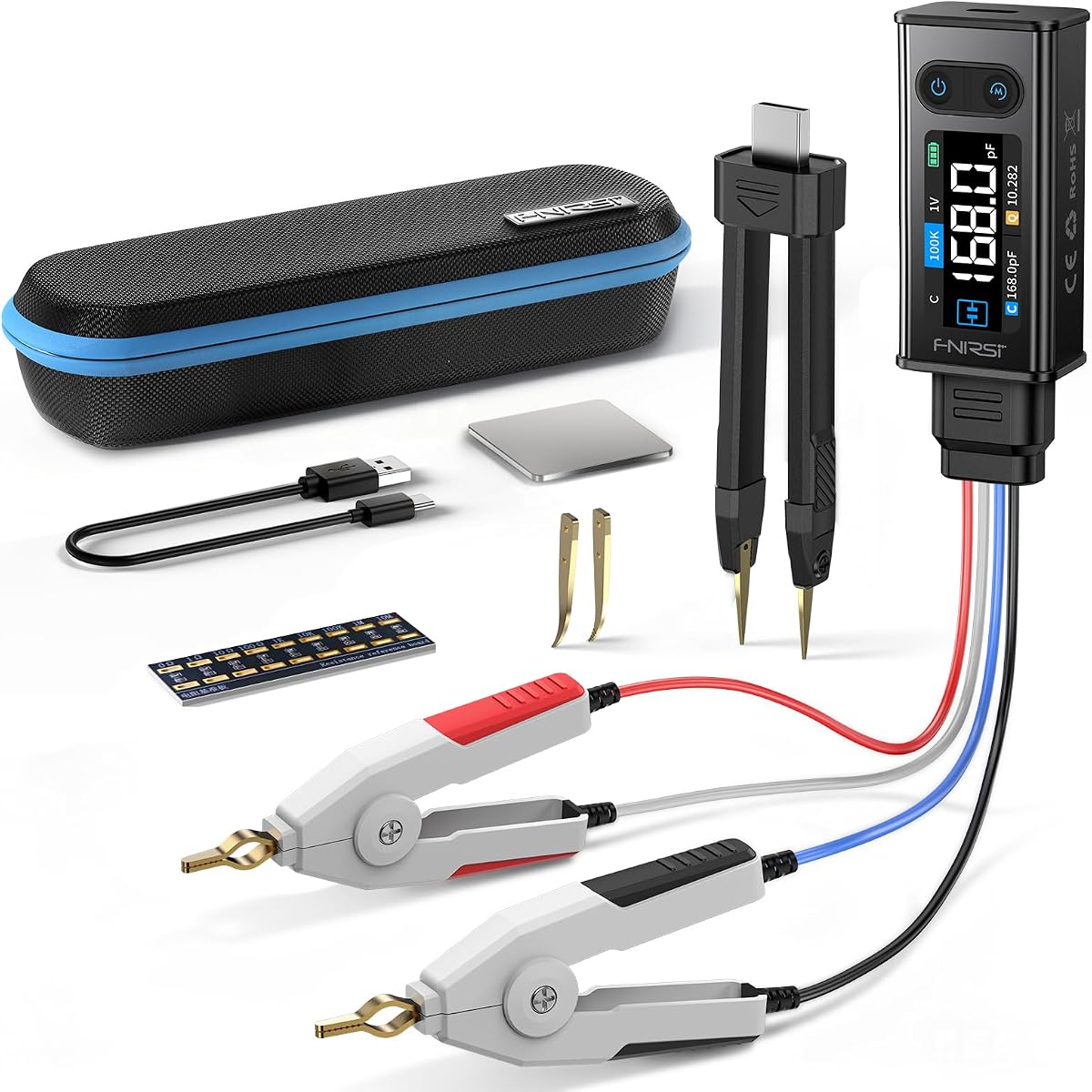


The FNIRSI LC1020E stands out as a top contender for electronic component testing with a robust feature set and high accuracy. It supports automatic detection and offers dual parameter displays for detailed analysis of capacitors, inductors, and resistors.
We may earn a commission when you buy through this link, at no additional cost to you.
Key strengths include its smart sorting mode which calculates relative error for quick screening of components. The device supports five different test frequencies ranging from 100Hz to 100kHz ensuring versatility across various application scenarios.
While highly capable users should be aware that proper calibration is necessary before use to maintain accuracy. Additionally discharging components prior to testing is essential to prevent damage to the meter or inaccurate results.
This model is ideal for hobbyists and technicians who need reliable portable testing without sacrificing precision. Its user-friendly interface and comprehensive measurement capabilities make it a strong recommendation for general electronics work.
The meter supports up to four measurements per second in fast mode ensuring efficient workflow during component sorting or bulk testing sessions.
A bright 2.8-inch TFT display with adjustable brightness allows for easy reading in various lighting conditions during bench work or field repairs.
We may earn a commission when you buy through this link, at no additional cost to you.
The DE-5000 is a well-established handheld LCR meter known for its reliability and comprehensive measurement capabilities. It offers automatic ranging and dual display functionality allowing users to view primary and secondary parameters simultaneously.
We may earn a commission when you buy through this link, at no additional cost to you.
Its ability to measure impedance and resistance with various secondary parameters like dissipation factor and quality factor makes it suitable for detailed component analysis. The included accessories such as test leads and tweezers add value to the package.
However the interface is less modern compared to newer models with color screens. Users might find the physical buttons and menu navigation slightly less intuitive than touch or simplified menu driven systems found on other devices.
This meter is a great choice for professionals who prioritize proven reliability and specific measurement modes over the latest digital interfaces. It remains a staple for those needing consistent performance in repair or lab environments.
Users can select from multiple test frequencies and serial or parallel modes automatically adapting to the device under test impedance for accurate results.
The standard package includes a variety of test leads and tools ensuring you have what is needed for immediate testing without additional purchases.
We may earn a commission when you buy through this link, at no additional cost to you.
The MATRIX MCR5200 is a high-end benchtop LCR meter designed for professional environments requiring extreme precision and data management. It boasts an accuracy of 0.1% across a wide frequency range of 40Hz to 200kHz.
We may earn a commission when you buy through this link, at no additional cost to you.
Its capabilities include data saving via USB or RS232C allowing for easy integration with PC software for long term analysis. The built-in comparator helps in quality control by flagging components that fall outside set tolerance limits.
While it offers superior performance it is designed strictly for benchtop use which limits portability. The higher price point may be prohibitive for casual hobbyists but is justified for production or serious R&D work.
This model is best suited for engineers and technicians who need laboratory grade measurements and data tracking. Its robust construction and advanced features make it a powerful tool for critical electronic testing tasks.
The meter supports saving data to a PC or USB stick using provided software which facilitates detailed reporting and historical tracking of component performance.
Manual hold and automatic range calibration options minimize measurement errors and ensure stability during long test sequences or critical production runs.
We may earn a commission when you buy through this link, at no additional cost to you.
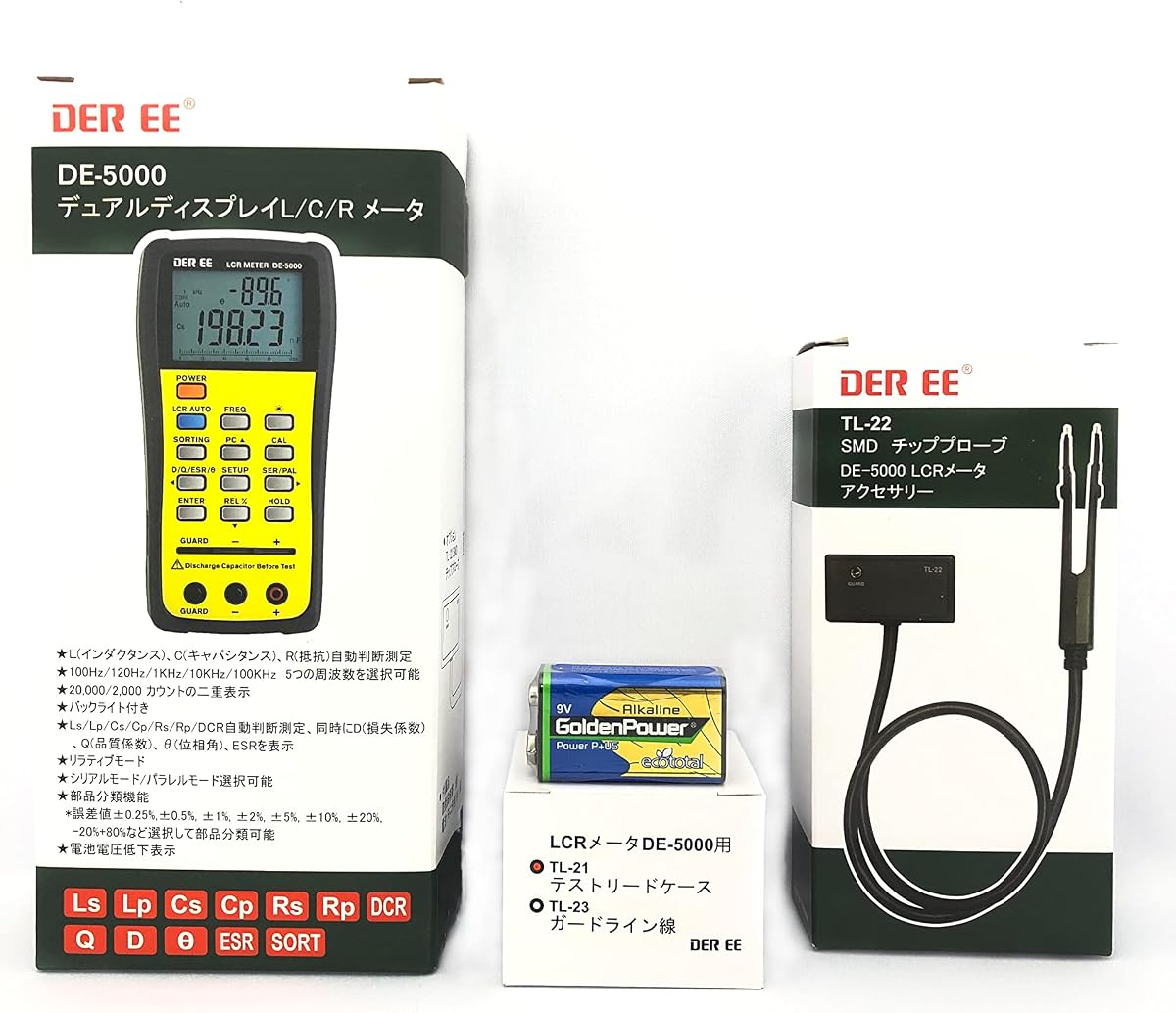
This De-5000 set provides a comprehensive package for electronic testing with all necessary accessories included in the box. It features a high resolution display and backlit screen for readability in low light conditions.
We may earn a commission when you buy through this link, at no additional cost to you.
The inclusion of TL-21 alligator leads and TL-22 SMD test leads ensures you can test a wide variety of components immediately. ISO 9001 certification adds a layer of trust regarding the manufacturing quality of the device.
Users should note that the core functionality is similar to the standard DE-5000 model which may mean a similar interface experience. The value lies primarily in the complete set of tools included rather than new measurement features.
Ideal for professionals upgrading or beginners looking for a ready to use kit this set removes the need for extra purchases. It is a practical choice for those who need reliability and immediate availability of test gear.
Selectables tolerance levels allow users to verify components against specific standards ensuring parts meet required specifications for circuit assembly.
The package includes protective carrying case and specific test leads which streamlines setup and ensures all tools are kept together for transport.
We may earn a commission when you buy through this link, at no additional cost to you.
The Proster LCR Meter is an affordable solution for hobbyists and beginners needing basic component testing capabilities. It offers a rotatable LCD screen and comes with a complete kit including test leads and a storage bag.
We may earn a commission when you buy through this link, at no additional cost to you.
While it lacks the advanced frequency options of higher end models it covers the most common measurement needs for general repairs and projects. The dual-slope A/D conversion helps in providing stable readings for inductance and capacitance.
Users might find the single display and lower max frequency limiting for complex RF work or high speed testing. However for basic troubleshooting and learning these limitations are often acceptable given the low cost.
This meter is highly recommended for students and hobbyists entering the field of electronics. Its ease of use and included accessories make it a great entry point for understanding component values and circuit behavior.
The rotatable display allows for comfortable viewing at any angle eliminating the need to hold the device during measurements on a workbench.
Providing a full kit with storage bag and battery ensures you can start testing immediately without needing to buy extra components.
We may earn a commission when you buy through this link, at no additional cost to you.
The FNIRSI LCR-ST2 is a compact meter designed specifically for SMD and through-hole component testing with integrated tweezers. It is highly portable and features a rechargeable battery for convenient use without constant battery replacement.
We may earn a commission when you buy through this link, at no additional cost to you.
Its all-in-one design allows for measuring resistors capacitors inductors and even diodes and voltage in a single tool. The rear magnet helps secure the device to metal workbenches during use which is a practical feature for bench work.
The smaller display compared to larger meters can be a challenge for reading small text. Additionally the built-in tweezers while convenient may not be as robust as separate high quality test leads for heavy duty use.
This device is perfect for mobile technicians or anyone needing a lightweight option for quick component verification. Its ability to measure voltage and test diodes adds versatility for general electronics troubleshooting on the go.
The compact size and Type-C charging allow you to carry it easily in a toolkit and recharge it using standard cables without dedicated chargers.
Auto sorting and primary secondary parameters help quickly identify abnormal components or verify part values against expected tolerances during repairs.
We may earn a commission when you buy through this link, at no additional cost to you.
The Peak Atlas LCR45 offers fluid LCR and impedance measurements with a focus on high resolution and ease of use. It supports both automatic and manual component type selection and test frequencies for flexible testing scenarios.
We may earn a commission when you buy through this link, at no additional cost to you.
Its enhanced measurement resolution allows for detection of very small changes in inductance capacitance and resistance which is crucial for precision applications. The menu system is designed to be intuitive for adjusting user settings.
The device may feel basic compared to modern units with color displays but its functionality remains robust. Users should be aware that accessories are limited so they may need to source their own test leads.
This meter is suitable for those who value measurement quality and simplicity over cosmetic features. The full one-year warranty provides peace of mind and supports its long term reliability in repair or hobbyist environments.
With enhanced resolution for inductance capacitance and resistance this meter ensures that minor deviations in component values are clearly visible.
Users can choose from DC 1kHz 15kHz or 200kHz depending on the application allowing for accurate readings across different types of components.
We may earn a commission when you buy through this link, at no additional cost to you.
The B&K Precision 879B is a deluxe handheld LCR meter featuring a dual display and backlit screen for clear reading. It is designed for universal testing of components and includes standard inputs for various test leads.
We may earn a commission when you buy through this link, at no additional cost to you.
Its dual display capability allows users to see primary and secondary parameters at the same time which enhances efficiency during analysis. The option for AC adapter power ensures it can run continuously without battery changes.
Compared to newer units it may feel heavier and have a less modern interface but it delivers solid performance for general electronics work. The robust build quality makes it suitable for frequent use in field or shop environments.
This meter is a strong choice for professionals who prefer traditional interfaces and reliable hardware. It serves well for those needing a durable handheld device that can handle various testing conditions without compromise.
The ability to use an AC adapter alongside battery operation ensures uninterrupted testing during long sessions or stationary bench work.
A backlit display ensures readability even in dimly lit areas which is often the case in repair shops or under equipment covers.
We may earn a commission when you buy through this link, at no additional cost to you.
The Extech LCR200 is designed specifically for measuring passive components such as inductance capacitance and resistance. It includes a built-in test fixture and features a dual backlit display for clear reading of primary and secondary parameters.
We may earn a commission when you buy through this link, at no additional cost to you.
Its open and short calibration capabilities help eliminate stray impedance ensuring more accurate measurements of the component under test. Five selectable test frequencies provide flexibility for testing different types of passive devices.
Users should note it is focused on passive components which may limit its utility for active device testing. However for general electronics repair and maintenance these functions are often sufficient for common tasks.
This meter is a good fit for technicians who need a straightforward tool for passive component verification. Its auto power off and limit settings add convenience and safety for routine testing workflows.
The built-in test fixture provides a secure way to hold components during measurement reducing hand movement errors and improving consistency.
Simple open and short calibration options allow for quick setup before measurements ensuring results are not skewed by external impedance.
We may earn a commission when you buy through this link, at no additional cost to you.
The Pro1-100KHz LCR Meter offers high accuracy of 0.1% for resistance and 0.2% for inductance and capacitance. It includes a smart SMD tweezers function and covers a wide measurement range making it versatile for various electronic needs.
We may earn a commission when you buy through this link, at no additional cost to you.
Its five test frequencies and multiple test voltages allow for precise characterization of components under different conditions. The addition of diode testing and ESR measurement enhances its utility for comprehensive circuit diagnostics.
While it is priced higher than budget models the accuracy and range justify the cost for professional applications. Beginners might find the features extensive but they offer room to grow as skills develop.
This meter is highly recommended for those needing precision measurements and advanced features in one tool. The one year warranty and lifetime support provide additional confidence in the product reliability and service.
The ability to measure from 20m ohms to 10M ohms for resistance ensures coverage across almost all common electronic component values.
Multiple test voltage options allow for testing components at different bias levels which can reveal behaviors not visible at standard voltages.
We may earn a commission when you buy through this link, at no additional cost to you.
Selecting the right Lcr Meter depends on your specific needs and technical requirements.
Accuracy determines how close a measurement is to the true value. Look for meters with high precision if you are working with sensitive circuits or tight tolerances.
Higher resolution allows you to detect smaller changes in component values. This is vital when sorting or grading components for quality control.
Different components perform differently at various frequencies. A good meter should offer multiple fixed frequencies to test components accurately across their operating ranges.
Ensure the meter supports frequencies relevant to your work such as 100kHz for general use or higher for RF applications.
Beyond basic LCR measurements consider if the device supports secondary parameters like ESR Q or D. These are critical for detailed analysis of capacitors and inductors.
Check if the meter can measure impedance and phase angle if your projects require deeper electrical characterization.
A clear display is essential for reading values in different lighting conditions. Backlit or color screens improve visibility and reduce eye strain during long sessions.
User friendly interfaces with intuitive menus make navigation easier. Avoid overly complex menus that slow down your workflow.
Decide if you need a handheld device for field work or a benchtop unit for lab use. Handhelds are convenient but benchtops often offer higher stability and power.
Consider battery life and charging options for portability. Rechargeable batteries with Type-C charging add modern convenience to handheld units.
For professional environments data logging capabilities are valuable. Check if the meter supports USB or serial ports for transferring data to a PC.
Software support can enhance analysis and reporting. Ensure compatibility with your existing systems before purchasing.
Build quality affects longevity. Look for robust cases and reliable components that can withstand frequent use or drops in a workshop.
Warranty terms and manufacturer support can influence your decision. A good warranty ensures protection against defects.
Proper test leads and fixtures are important for accurate results. Ensure the meter comes with necessary accessories or supports standard ones.
Some models include specialized tools like tweezers for SMD components which can save time and effort.
Always calibrate the meter before use to ensure accurate readings. Perform open and short calibration as per the manufacturer instructions to zero out stray impedance.
Handle components with care and discharge capacitors before testing to avoid damage to the meter. This protects internal circuits and ensures safe operation.
Store the device in a dry place and keep the contacts clean. Regular maintenance extends the life of the instrument and ensures consistent performance.
An Lcr Meter is used to measure inductance (L), capacitance (C), and resistance (R) of electronic components. It helps identify component values, check for defects, and ensure parts meet specific circuit requirements. This tool is essential for electronics repair, design, and quality control.
A standard multimeter measures basic electrical properties like voltage, current, and resistance but often lacks accuracy for inductance and capacitance. An Lcr Meter provides precise measurements for these specific components at various test frequencies making it superior for component analysis and sorting.
Calibration removes errors caused by test leads and internal circuitry ensuring that measurements reflect the true component values. Without calibration stray impedance can lead to inaccurate results which may affect circuit performance or diagnosis.
No you should not test live circuits with an Lcr Meter as it can damage the instrument and give incorrect readings. Always ensure the power is off and components are discharged before connecting the meter to the circuit.
The best test frequency depends on the component type and application. Lower frequencies like 100Hz are good for large capacitors while higher frequencies like 100kHz are better for inductors and high value capacitors. Choose a frequency relevant to the component's expected operating conditions.
Secondary parameters include Equivalent Series Resistance (ESR) and Dissipation Factor (D). ESR shows resistance losses within a capacitor important for filtering circuits. D indicates energy loss in a component. These parameters provide deeper insights than basic LCR values.
Choosing the right Lcr Meter involves balancing accuracy, features, and budget. The top models reviewed offer a range of options from portable tools to precision benchtop units suitable for various applications.
Prioritize features that match your workflow such as data logging or auto ranging if you work efficiently. Consider portability if you need to move between sites or prefer bench stability for lab tasks.
Remember that product details can change so always verify current specifications before purchase. Select a tool that fits your technical needs and offers reliability for long term use in your projects.